How Ball Valve Seat Design Impacts Flow Efficiency
Content Menu
● Ball Valve Seat Fundamentals
>> Ball Valve Seat Roles and Functions
>> Soft seats versus metal seats
>> Surface finish and machining accuracy
>> Seat materials and compatibility
● Seat design variants and their impact
● Materials and performance under harsh service
● Applications and OEM capabilities
>> Industries and service profiles
>> Design guidelines and best practices
>> Operation, maintenance, and reliability
● FQA
Introduction
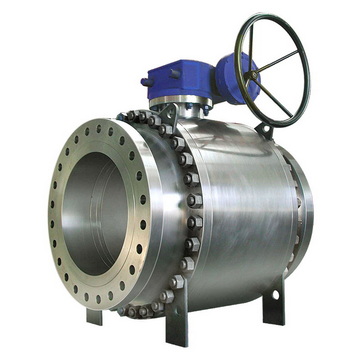
Ball valve seats are the sealing interface between the ball and the valve body, and their design determines not only leak-tightness but also the flow efficiency and long-term reliability of the valve in demanding service. In oil and gas upstream, midstream, and downstream operations, as well as seawater desalination and offshore drilling platforms, the operating environment imposes extreme temperature, pressure, corrosion, and particulate challenges. This article delves into how seat design influences flow characteristics, seals, wear behavior, and maintenance economics, while showcasing our capabilities in designing, developing, and manufacturing high-performance ball valve seats for international brands, wholesalers, and OEM manufacturers.
Ball Valve Seat Fundamentals
Ball Valve Seat Roles and Functions
The seat forms the primary contact surface with the ball to establish a seal when the valve is closed and guides the ball's motion during operation. The geometry of the seating surface, its material composition, and the machining quality collectively govern closure integrity, leakage class, and resistance to wear under cyclic loading. In many valve configurations, the seat also contributes to cavitation resistance and flow path integrity, influencing pressure drop and throttling performance.
Soft seats versus metal seats
Soft seats, typically elastomeric or polymer-based, offer superior initial seating force, lower friction, and excellent sealing at room temperature and moderate pressures. Metal seats, often using stainless steel, nickel alloys, or cobalt-based materials, provide higher temperature and pressure capability, better erosion resistance, and longer service life in aggressive media. The choice between soft and metal seats is a fundamental trade-off between seating performance, thermal stability, chemical compatibility, and maintenance costs. In high-temperature, high-pressure, or corrosive environments, metal seats or metal-to-metal combinations may be preferred, while soft seats excel in clean, moderate-service media or where low torque is essential.
Surface finish and machining accuracy
Seating surfaces require tight geometrical tolerances and controlled surface finishes to ensure repeatable seating and low leak rates. Finishes influence wear resistance, friction, and chemical compatibility with the ball and the media. Surface treatments (e.g., hardening, coatings) can enhance abrasion resistance and corrosion resistance, contributing to longer service intervals in offshore or desalination environments.
Seat materials and compatibility
- Soft seats: EPDM, FKM, PTFE, and other elastomeric compounds offer chemical compatibility with a broad range of hydrocarbons and water-based media, with temperature limits that vary by compound.
- Metal seats: Stainless steel, alloyed nickel-based materials, and other high-temperature alloys provide robust performance under elevated temperature and aggressive media.
Material selection must consider chemical compatibility with the process fluid, thermal expansion differences with the ball, and the potential for galvanic interactions in multi-material assemblies.
Seat design variants and their impact
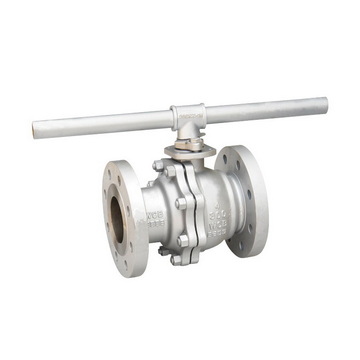
Fixed seat versus floating ball arrangements, and cartridge or modular seat configurations, influence how the seat interacts with the ball, how seating forces are generated, and how maintenance is executed.
- Fixed seat with floating ball: The ball can rotate and seal against a fixed seat, often yielding favorable torque characteristics and straightforward replacement. This arrangement can balance ease of maintenance with reliable sealing in a range of media.
- Floating seat with fixed ball: The seat is allowed to move slightly to accommodate seating, while the ball remains fixed relative to the stem. This can enhance sealing force distribution and accommodate minor misalignments but may require tighter manufacturing controls.
- Cartridge or modular seats: These designs enable rapid replacement and standardized parts, reducing downtime in field service and enabling easier OEM customization. They also allow selective use of different seat materials in different service zones.
Each variant impacts leak-tightness, wear patterns, and maintenance cost differently.
Materials and performance under harsh service
Seating materials must resist erosion from entrained solids, chemical attack from process fluids, and degradation from repeated thermal cycles. In seawater desalination and offshore platforms, corrosion resistance, biofouling resistance in some systems, and long-term performance are critical. The use of protective coatings or surface engineering can extend seat life without compromising sealing performance.
Applications and OEM capabilities
Industries and service profiles
- Oil and gas (upstream, midstream, downstream): hydrocarbons, sour gas considerations, high-pressure regimes, and potential presence of particulates demand robust seating systems with reliable sealing and surface durability.
- Seawater desalination: chloride-rich media require corrosion-resistant seat materials and seals, often in high-flow, high-velocity conditions.
- Offshore drilling platforms: aggressive environment exposure, vibration, and the need for long service intervals and rapid field maintenance.
OEM capabilities
- Custom seat geometry and material selections tailored to API and ISO standards.
- Integrated testing protocols, including seat wear, leakage, and pressure-cycle tests, aligned with customer specifications.
- Global supply chain support and spares provisioning to minimize downtime.
- Customer co-design processes that allow rapid prototyping, validation, and scalable production.
Design guidelines and best practices
- Align seat geometry with expected flow profiles to minimize turbulence and pressure drop around the seating area.
- Provide adequate backing support and appropriate clearance to accommodate thermal expansion and mechanical tolerances without inducing seating loss.
- Consider modularity for rapid replacement and different media exposure across service lines.
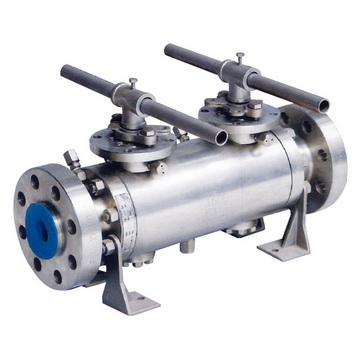
- Ensure compatibility with dynamic sealing concepts and potential double-sealing configurations where required by the application.
- Adhere to industry standards (API, ISO) and document conformity, test results, and traceability for customer audits.
- Plan for field serviceability, including straightforward disassembly and reassembly procedures and readily available spare seats in regional hubs.
Operation, maintenance, and reliability
- Regular inspection regimes and non-destructive testing approaches to detect wear or corrosion at the seating interface.
- Maintenance planning that accounts for media compatibility, cycle frequency, and the expected valve duty cycle.
- Spare parts strategy, including modular seat cartridges and compatible seat materials for mixed-service fleets.
- Training and technical support offerings for customers to ensure correct replacement, seating alignment, and safety.
Conclusion
Ball Valve Seat design is a keystone of flow efficiency, leak-tightness, and total cost of ownership in challenging industrial environments. A carefully engineered seat that harmonizes material selection, geometry, and surface engineering not only delivers superior initial sealing but also sustains performance across thousands of cycles under high loads, corrosion risk, and thermal fluctuations. Our OEM-centered approach—spanning custom seat geometry, material sourcing, rigorous testing, and rapid production—enables international brands, wholesalers, and manufacturers to achieve consistent performance in oil and gas, seawater desalination, and offshore drilling applications. By partnering with us, customers access optimized seat designs, validated by real-world service data, with the ability to tailor solutions to API and ISO standards, minimize downtime, and streamline global supply chains. Contact us for a technical briefing, prototype evaluation, or full-scale production plan.
FQA
1. What is the key difference between soft seat and metal seat ball valves, and how does this choice influence flow performance?
- Brief answer: Soft seats use elastomeric or polymer materials to create a tight seal at lower torque, delivering excellent leak tightness in moderate conditions and reducing flow resistance in clean media. Metal seats provide high temperature and high-pressure capability with superior erosion resistance, making them more suitable for harsh or abrasive media. The seat choice affects both leak integrity and flow characteristics, with soft seats often offering lower initial resistance and metal seats maintaining performance under tougher service conditions.
2. How does seat design affect leak-tightness under high temperature and high pressure, and what design strategies help mitigate risk?
- Brief answer: Leak-tightness depends on the seating geometry, contact pressure distribution, and material stability under thermal and mechanical loads. Effective strategies include balanced seating pressures to prevent extrusion, matching thermal expansion of seat and ball materials, backing supports to preserve geometry, protective coatings to reduce wear, and modular seat configurations to enable controlled replacement. Rigorous testing (pressure and thermal cycling) validates performance before deployment.
3. Which seat materials and designs are most suitable for seawater desalination and offshore platforms, considering corrosion resistance and maintenance?
- Brief answer: For seawater and offshore environments, corrosion resistance is paramount. Metal seats made from corrosion-resistant alloys (e.g., stainless or nickel-based alloys) with compatible coatings perform well under chloride exposure and high flow. Soft seats may be used where lower torque and easier maintenance are prioritized, but require careful chemical compatibility with seawater mixtures. Modular or cartridge-style seats facilitate rapid field maintenance, reducing downtime.
4. What maintenance practices extend the life of ball valve seats, and how should replacement intervals be determined?
- Brief answer: Extend seat life through regular inspections, controlled cleaning to minimize abrasion, avoiding abrupt pressure/temperature changes, and ensuring correct alignment during installation. Replacement intervals should be guided by service conditions (media, temperature, pressure, particulates), valve duty cycle, and observed wear or leakage trends. Using modular seats and keeping a stocked spare set supports proactive maintenance and minimizes downtime.
5. How can OEM partners tailor ball valve seats to meet API/ISO standards while balancing cost and supply chain resilience?
- Brief answer: OEM partners tailor seats by selecting compliant materials, optimizing seat geometry for the intended flow regime, and employing modular cartridge concepts for quick customization. A robust QA program with traceability and standardized testing ensures API/ISO conformity. Balancing standard components with customized options enhances supply chain resilience and cost control, enabling reliable global delivery for international projects.
Hot tags: Ball Valve Seat Design, Flow Efficiency in Ball Valves, Impact of Valve Seat Design, Ball Valve Performance, Valve Seat Design and Flow Rate, Optimizing Ball Valve Flow, Ball Valve Flow Characteristics, Valve Seat Design Factors, Ball Valve Seat Materials, Enhancing Flow Efficiency with Valve Seats