How to Inspect and Replace Ball Valve Seats Safely
Content Menu
● Understanding Ball Valve Seats
● Pre-inspection planning and safety
● Material selection and compatibility considerations
● Safe disassembly and preparation
● Assessment and decision criteria for replacement
● Repair and replacement procedures (step-by-step)
● Quality control and safety considerations
● Field considerations and special applications
● FAQ
>> 1. What are the signs that a Ball Valve Seat needs replacement?
>> 2. How is a Ball Valve Seat replaced safely in the field?
>> 3. Which seat materials are best for seawater desalination applications?
>> 4. How often should Ball Valve Seats be inspected in offshore drilling environments?
>> 5. What standards or tests should be performed after seat replacement?
Introduction
Ball valves are critical in controlling the flow of liquids and gases in demanding environments, from upstream, midstream, and downstream oil and gas to seawater desalination and offshore drilling platforms. Among the most important components of a ball valve's sealing performance is the Ball Valve Seat. The seat forms the primary interface with the ball, determines the quality of the shutoff, and directly influences leakage rates, valve torque, and long-term reliability. For original equipment manufacturers (OEMs) and international buyers, understanding how to inspect, diagnose, and replace Ball Valve Seats safely is essential for maintaining system integrity, reducing maintenance costs, and ensuring compliance with industry standards. This article provides a practical, step-by-step guide to inspecting and replacing Ball Valve Seats across floating, trunnion/ear-pin, and top-entry ball valves, with attention to materials, design variants, field conditions, and best practices for safety and quality control. Throughout, the focus remains on Ball Valve Seat as the centerpiece of sealing performance and lifetime performance in harsh operating environments.
Understanding Ball Valve Seats
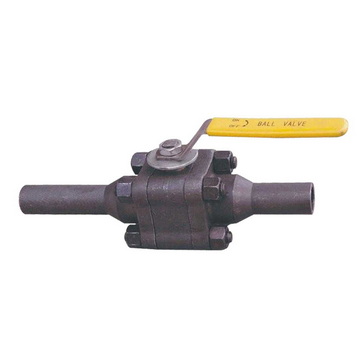
A Ball Valve Seat is the stationary or semi-stationary sealing surface against which the ball seals when the valve is closed. Seats can be constructed from a variety of materials, including polytetrafluoroethylene (PTFE), reinforced PTFE composites, elastomeric compounds, and metal alloys, depending on the application. The choice of Ball Valve Seat material affects chemical compatibility, temperature limits, seating surface hardness, and wear resistance. In floating-ball designs, the seat often bears the primary sealing load as the ball floats toward the seat under closure forces. In trunnion/ear-pin designs, the seats may also accommodate lateral loads and misalignments, while top-entry valves present unique access considerations for seat inspection and replacement. Understanding how a Ball Valve Seat performs under pressure and in contact with the ball is essential for diagnosing leaks, wear patterns, and seating issues.
Pre-inspection planning and safety
Inspecting and replacing Ball Valve Seats requires careful planning to protect personnel and asset integrity. Start with a written lockout/tagout plan, confirm that the system is depressurized, drained, and isolated from all energy sources, and ensure compatible permit-to-work procedures are in place for the maintenance crew. Prepare a detailed tool list, spare seats matching the exact model and material, gaskets, lubricants, cleaning agents, torque wrenches calibrated to the correct ranges, soft-faced mallets or plastic tools to avoid seat damage, inspection gauges, and non-destructive testing (NDT) equipment if required. Document the valve model, serial number, seat type, and manufacturing lot to facilitate traceability and future maintenance planning. The Ball Valve Seat must be inspected in accordance with relevant standards, internal procedures, and OEM specifications; any deviation from these requirements should be escalated through proper channels.
Material selection and compatibility considerations
Seat materials must be matched to service conditions. PTFE-based seats provide excellent chemical resistance and low friction but may suffer from creep at high temperatures or under sustained loads. Metal seats offer high-temperature and high-pressure endurance and durability in abrasive or erosive media but can cause higher seating torque and potential galling if not properly engineered. Composite or reinforced seats attempt to blend the advantages of both. For seawater and offshore environments, corrosion resistance and biofouling considerations may influence material choices, while oil and gas service requires careful attention to thermal cycling, pressure surges, and hydrogen embrittlement risks for certain alloys. OEMs should maintain a catalog of approved seat materials, with documented test results for common process fluids and design margins.
Safe disassembly and preparation
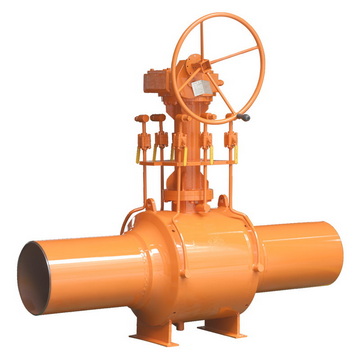
Before disassembly, isolate the valve from system pressure and secure the area to prevent accidental operation. Remove the actuator or handwheel safely, depending on valve type, and protect the stem and seating interfaces from contamination. When separating components, use appropriate tools to minimize seating damage: avoid forceful prying that could scratch the ball or seats. Maintain cleanliness to prevent debris from entering the valve cylinder and seating surfaces. During disassembly, photograph critical interfaces and capture measurements to facilitate reassembly and residual wear assessment. For top-entry valves, access to the seating area may require careful disassembly of bonnet components while preserving alignment features and seating gaps for reassembly.
Assessment and decision criteria for replacement
Decide whether to repair, rework, or replace Ball Valve Seats based on wear depth, surface integrity, and seating surface flatness. Minor seat wear with preserved geometry and no cracking may be re-lapped or polished within defined roughness limits. Moderate wear with localized pitting or minor deformation may require seat reconditioning plus a replacement seal set, while significant scoring, erosion, or surface bonding with foreign material warrants replacing the entire seat assembly and potentially associated gaskets and seals. For metal seats, ensure that the seat thickness remains within factory-specified tolerances; any thinning beyond limits compromises sealing performance and may require a complete valve refurbishment. Document the decision with measured data and approved deviation requests if necessary.
Repair and replacement procedures (step-by-step)
Step 1: Isolation and cleanliness
- Confirm complete depressurization, circuit isolation, and safe access.
- Wipe the assembly surfaces with lint-free, non-residue cleaners and prepare a clean, controlled work area.
Step 2: Dismantling and part identification
- Remove the bonnet, end caps, or actuator as required to access the Ball Valve Seat geometry.
- Identify the seat type and its seating arrangement, noting orientation marks and alignment features.
Step 3: Seat inspection and preparation
- Inspect seating surfaces for wear, corrosion, or damage.
- If reconditioning, perform careful lapping or polishing to restore a flat, uniform seating plane within specified roughness.
- For replacements, verify compatibility of the new Ball Valve Seat with the ball and body, and confirm the seating surface geometry.
Step 4: Removal and installation of seats
- Remove damaged seats using nonabrasive tools to prevent scoring or surface damage on mating components.
- Clean mating surfaces thoroughly to remove glaze, debris, or residues that could impair seal integrity.
- Install the new Ball Valve Seat, ensuring correct orientation, alignment, and seating depth as defined by OEM drawings.
- Lightly lubricate as recommended by the OEM to facilitate smooth seating during operation, then torque fasteners to the specified values in a star pattern to ensure even seating pressure.
Step 5: Reassembly and pre-testing
- Reassemble bonnet/actuator and secure all fasteners to recommended torque values.
- Perform static sealing tests (seat-to-ball and seat-to-body interfaces) and record test data.
- Conduct functional testing under simulated service conditions, monitoring for leaks, torque changes, and smooth operation.
Step 6: Documentation and traceability
- Log part numbers, batch numbers, and testing results in the asset management system.
- Record any deviations or non-conformances and implement corrective actions as required.
- Update maintenance schedules and OEM-approved spare part inventories.
Quality control and safety considerations
- Always verify that replacement materials meet the OEM standards and approved supplier certifications.
- Maintain a clean, controlled environment during disassembly and assembly to prevent contamination of seals and seating surfaces.
- Use calibrated tools and verify torque values using proper procedure to avoid over- or under-tightening, which can distort the seating interface.
- Implement a sign-off process with supervisor approval after inspection, replacement, and testing, ensuring traceability and accountability.
Field considerations and special applications
- Oil & gas applications subject to high pressure and temperature require robust seat designs and careful alignment to manage thermal expansion and cyclic loading.
- Seawater desalination systems demand corrosion resistance and saltborne cleanliness; consider seal and seat materials that resist chloride-induced corrosion and biofouling.
- Offshore drilling platforms present logistical challenges; emphasize modular seat assemblies, standardized replacement intervals, and on-site training for maintenance teams to minimize downtime.
Post-replacement testing and acceptance
- Static and dynamic leak testing should verify the integrity of the seating interface under representative service conditions.
- Performance tests should validate proper operation of actuation, seating, and return to safe standby states.
- Maintain a closed-loop record of test results for compliance and future maintenance planning.
Conclusion
Inspecting and replacing Ball Valve Seats safely is a foundational capability for maintaining the reliability and safety of critical process systems. A well-executed seat inspection and replacement program minimizes leakage, reduces unplanned downtime, and extends valve life, contributing to lower total cost of ownership for oil and gas, desalination, and offshore applications. OEMs and international buyers benefit from standardized procedures, clear material specifications, accurate documentation, and comprehensive on-site support that align with their unique process fluids and operating environments. By adopting rigorous inspection criteria, appropriate seat materials, and precise installation practices, the Ball Valve Seat remains a durable, high-performance component that sustains system integrity over the long term.
Call to action
Partner with our OEM-enabled facility to tailor Ball Valve Seat solutions to specific media, temperatures, and regulatory requirements. Contact us to discuss seat material options, replacement programs, training for on-site teams, and comprehensive technical support across global markets. Your next maintenance project deserves a qualified, reliable partner with proven experience in floating, trunnion/ear-pin, and top-entry Ball Valves for oil and gas, seawater desalination, and offshore platforms.
FAQ
1. What are the signs that a Ball Valve Seat needs replacement?
- Visible wear, pitting, or cracking on the seating surface; persistent leakage at shutoff; abnormal valve torque or difficult closure; misalignment or uneven seating contact observed during inspection.
2. How is a Ball Valve Seat replaced safely in the field?
- Isolate and depressurize the system; gather compatible replacement seats and seals; carefully disassemble, clean mating surfaces, install new seats per OEM specifications, torque fasteners correctly, and perform static and functional tests before returning to service.
3. Which seat materials are best for seawater desalination applications?
- Materials with strong corrosion resistance and salt tolerance, such as advanced polymers or reinforced composites for PTFE-like seats, or metal seats with protective coatings, selected based on temperature, pressure, and fluid chemistry per OEM guidance.
4. How often should Ball Valve Seats be inspected in offshore drilling environments?
- Inspection frequency should be defined by the OEM's preventive maintenance schedule, operating conditions, and regulatory requirements, typically tied to service hours, startup/shutdown cycles, and observed leakage or torque variations.
5. What standards or tests should be performed after seat replacement?
- Static seat-to-ball and seat-to-body leak tests, functional tests of valve operation, torque checks, and compliance testing according to applicable industry standards and OEM specifications.
Hot tags: Inspecting Ball Valve Seats, Replacing Ball Valve Seats, Safe Valve Seat Replacement, Ball Valve Maintenance, How to Replace Valve Seats, Valve Seat Inspection Tips, Safe Valve Seat Handling, Ball Valve Repair Procedures, Valve Seat Wear and Tear, Preventing Valve Seat Damage