Top 10 Full Welded Ball Valve Retailers in China
Content Menu
● Introduction: Why Source Full Welded Ball Valves from China
● How We Evaluate High‑Quality Full Welded Ball Valve Suppliers
● Technical Essentials of Full Welded Ball Valves (for Buyers)
● Why China Is a Strategic Cluster for Full Welded Ball Valves
● Top 10 Full Welded Ball Valve Retailers and Manufacturers in China (2026)
>> 1. Wenzhou Leader Flow Control Equipment Co., Ltd. (WZLD) – R&D‑Driven OEM Partner for SMEs
>> 2. ONERO – Export‑Focused Ball Valve Manufacturer
>> 3. NSV Valve – High‑End Project‑Oriented Supplier
>> 4. Tianyu Valve – Broad Industrial Coverage
>> 5. Oviko Group – Specialty and Custom Valves
>> 6. Welco Valve Co., Ltd. – General Export Manufacturer
>> 7. Xinhai Valve – Oil & Gas Application Focus
>> 8. Zhejiang Liangyi Valve Co., Ltd. – Regional Cluster Player
>> 9. RKSfluid – Comprehensive Valve Brand
>> 10. Additional Cluster Manufacturers (Representative Category)
● Buyer's Guide: How to Verify and Work with Chinese Full Welded Ball Valve Suppliers
>> Step 1: Pre‑screening and document review
>> Step 2: Technical and QC verification
>> Step 3: Sampling and pilot order
>> Step 4: Logistics and documentation
● Common Pitfalls When Sourcing Full Welded Ball Valves (and How to Avoid Them)
>> "Inside" Avoidance Tip (Rarely Put Online)
● External Data Points and Industry Benchmarks
● Conclusion and Call to Action
● FAQ: Advanced Questions Buyers Often Ask
>> 1. How can I verify whether a supplier's ISO 9001 certificate is still valid?
>> 2. What is the best way to confirm that full welded ball valve welds are properly tested?
>> 3. How do I balance MOQ and price when starting with a new Chinese valve supplier?
>> 4. How can I check if a Chinese TS or special equipment license is genuine?
>> 5. What should I ask a supplier to assess their OEM/ODM capability for my brand?
Introduction: Why Source Full Welded Ball Valves from China
China is one of the most important global manufacturing hubs for industrial valves, with a mature supply chain around forged steel, precision machining, and surface treatment. In the ball valve segment, Chinese factories now cover the full spectrum from commodity floating ball valves to high‑pressure full welded ball valves for gas and district heating networks.
According to recent market studies, the global ball valve market is projected to grow from about 14.8 billion USD in 2025 to 22.9 billion USD by 2034, driven by energy infrastructure and industrial upgrades. Within this, fully welded ball valves benefit from replacement of aging pipeline networks and expansion of urban district heating systems. For professional purchasing managers, China offers a combination of competitive cost, flexible OEM/ODM options, and increasingly complete certification portfolios.
How We Evaluate High‑Quality Full Welded Ball Valve Suppliers
Before listing the top retailers and manufacturers, it is important to clarify how a professional buyer should evaluate potential partners.
Key dimensions we apply in this guide:
- Factory certifications and compliance – We look for ISO 9001 as a basic requirement, and prefer suppliers that also hold ISO 14001, ISO 45001, TS (China special equipment license), and industry‑relevant approvals such as CE for PED, ATEX where applicable, and API/ANSI compliance.
- Engineering and R&D capacity – We prioritize factories that design and develop their own full welded ball valves, rather than only assembling standard components. Indicators include in‑house engineers with more than 10–15 years of experience, ability to support non‑standard bore/length, special materials, and pipeline‑specific design optimization.
- Quality control and testing – Reliable suppliers invest in PMI, UT, impact testing, hardness testing and 100% pressure testing for each valve. A dedicated material laboratory and traceability system is a strong signal that the factory can consistently supply safety‑critical valves.
- Delivery reliability and internal systems – Use of ERP, standardized production routing and clear production planning helps ensure on‑time delivery, which is increasingly important for EPC and framework contracts. We favor suppliers with proven export experience to multiple regions and long‑term repeat customers.
- OEM/ODM scalability and communication – For overseas brands and wholesalers, the ability to customize design, branding, documentation and packaging, plus responsive English communication, is essential. We also look at their willingness to support smaller trial orders before scaling up.
These criteria combine on‑site capabilities (facilities, QC laboratory, certifications) with commercial feasibility (MOQ, lead time, OEM flexibility), aligning with how experienced global sourcing managers typically evaluate valve suppliers.
Technical Essentials of Full Welded Ball Valves (for Buyers)
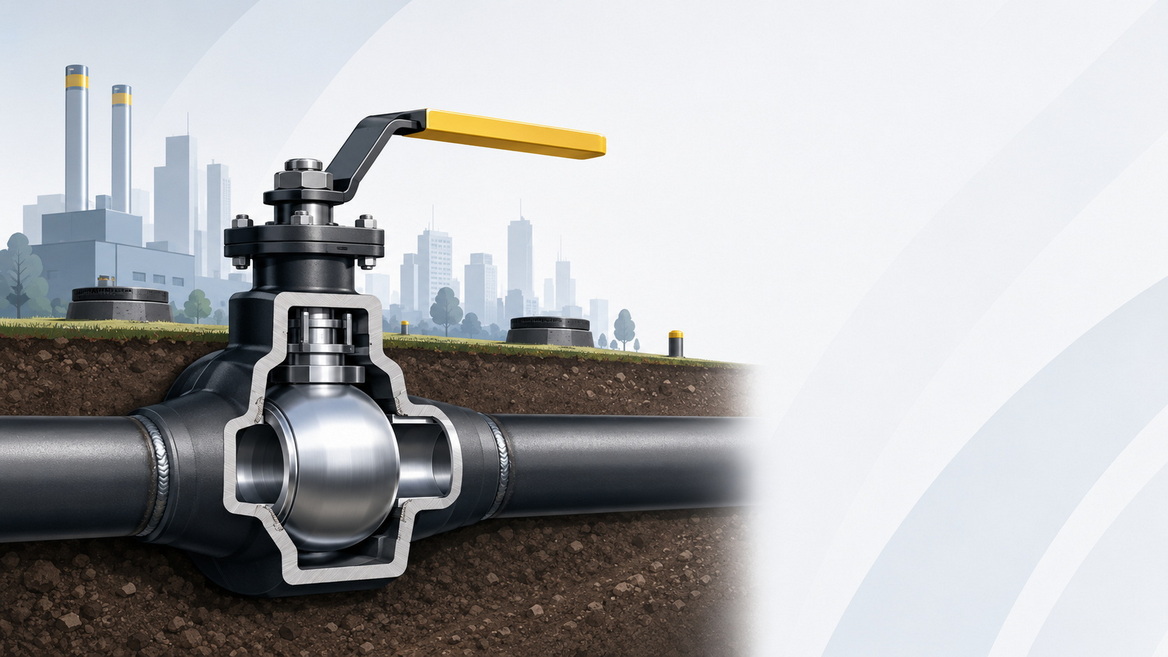
Full welded ball valves are typically used in buried or long‑term service conditions, where leakage, external corrosion and maintenance access are critical. To evaluate a Chinese supplier, purchasing managers should understand several technical aspects:
- Materials and grades – Common body materials are carbon steel (such as A105 or equivalent), low‑temperature carbon steel, and stainless steel for corrosive environments. For pipelines, material impact toughness and NACE compliance may be required, especially in sour gas applications.
- Design and standards – High‑quality full welded ball valves should be designed to API, ANSI, BS, EN or similar recognized standards, covering wall thickness, pressure rating and test requirements. For buried pipelines, many projects specify fully welded constructions to prevent external leakage and minimize potential failure points.
- Pressure and size range – Typical size range runs from DN15 (1/2") up to DN900 (36"), with pressure ratings from Class 150 to 2500, depending on the supplier. When comparing factories, ensure that their machining and welding capability truly covers the upper end of your required pressure and size range.
- Testing and inspection – Critical tests include shell and seat pressure tests, NDT of welds (UT, MPI), impact testing for low‑temperature service, and 100% visual inspection. Buyers should also confirm whether the factory can provide MTCs, ITPs, and third‑party inspection reports from agencies such as LRQA or others when required.
- Environmental and safety compliance – While RoHS is more commonly associated with electrical products, oil and gas buyers increasingly ask about environmentally conscious production, including ISO 14001 and control of hazardous substances in coatings and sealing materials. CE (for PED) and ATEX are relevant when valves are exported to Europe for certain applications.
Having this technical context allows buyers to ask the right questions and interpret suppliers' drawings and data sheets more accurately.
Why China Is a Strategic Cluster for Full Welded Ball Valves
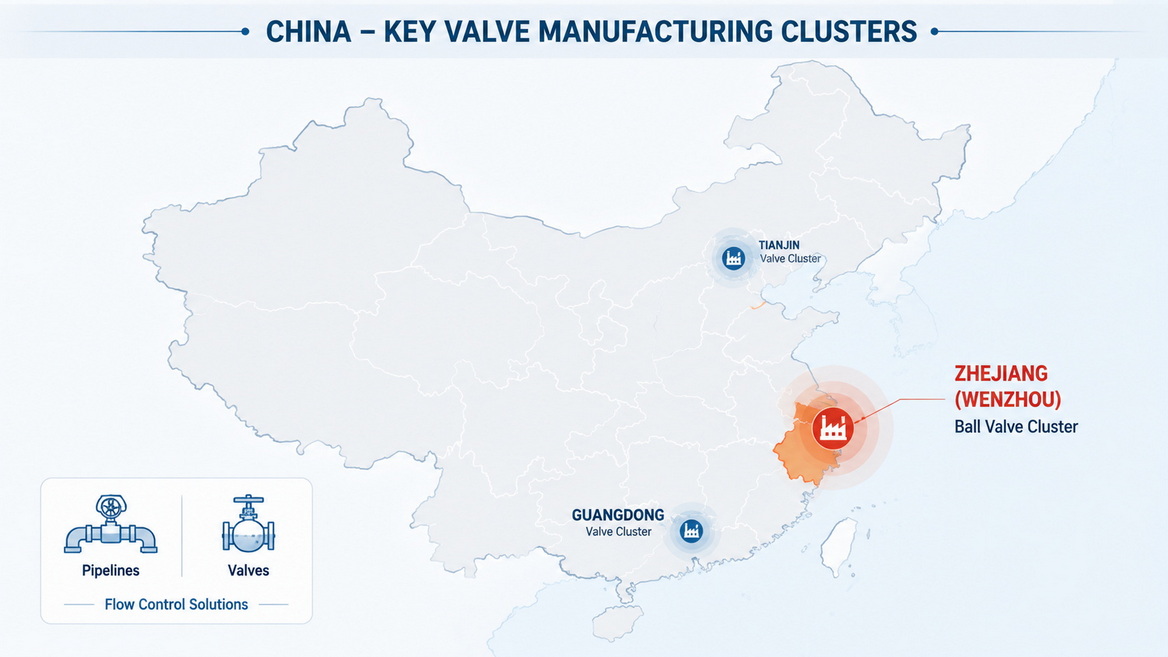
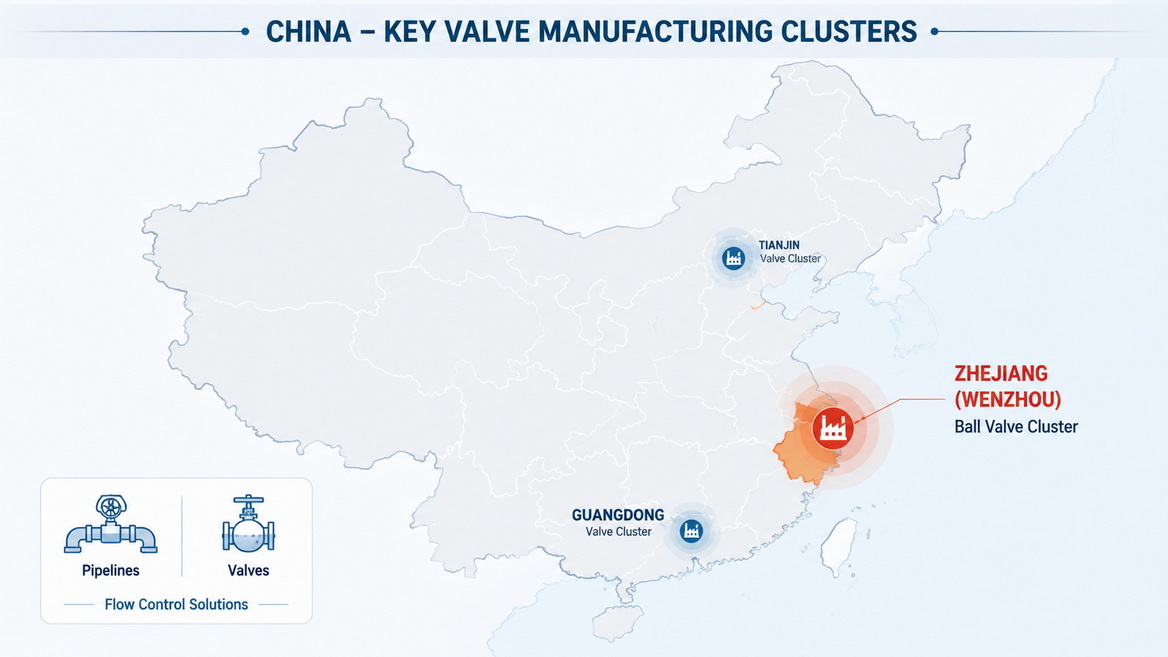
Similar to Foshan's established cluster in furniture and Shenzhen's ecosystem in electronics, several Chinese regions have formed strong industrial clusters for valves and flow control equipment. Areas in Zhejiang, for example, host numerous ball valve factories, machining shops, foundries and testing labs that support both domestic and export markets.
This clustering brings several advantages for overseas buyers:
- Cost efficiency and component availability – Proximity to foundries, forging plants and machining partners reduces logistics costs and lead times for body forgings, balls, stems and seals.
- Skilled labor and know‑how – Engineers and technicians often move within the region's valve companies, spreading best practices for welding, NDT and testing of safety‑critical valves.
- Export‑oriented experience – Many Chinese valve factories have grown with overseas markets and are familiar with documentation, inspections and standards often required by European, Middle Eastern and American customers.
For purchasing managers, working with a factory deeply embedded in such a cluster can reduce supply risk and make it easier to source related valve types (floating, trunnion, top entry) from one consolidated partner.
Top 10 Full Welded Ball Valve Retailers and Manufacturers in China (2026)
Below is a curated list of 10 representative Chinese suppliers and retailers active in the full welded ball valve segment. This list focuses on firms with export experience and a demonstrated capability in ball valves, including full welded designs.
1. Wenzhou Leader Flow Control Equipment Co., Ltd. (WZLD) – R&D‑Driven OEM Partner for SMEs
Wenzhou Leader Flow Control Equipment Co., Ltd., founded in 2007 and located in Yueqing, Zhejiang, focuses on the design, development and manufacture of high‑quality ball valves, including fully welded trunnion and fully welded floating ball valves. The company operates a modern plant of about 3,000 m² with professional production equipment and experienced ball valve engineers with over 20 years of design experience.
WZLD's quality management system is certified to ISO 9001 and TS, and the factory maintains its own material testing laboratory, equipped with PMI devices, impact test systems, UT, MPI and hardness testers to control incoming material quality and welding integrity. Their product range covers floating ball valves, trunnion‑mounted ball valves, top‑entry ball valves and fully welded ball valves, designed to meet API, BS, ISO, ASME, ANSI, EN and GOST standards, in sizes from 1/2" to 36" and pressure ratings from Class 150 to 2500 in carbon steel, stainless steel and special alloys.
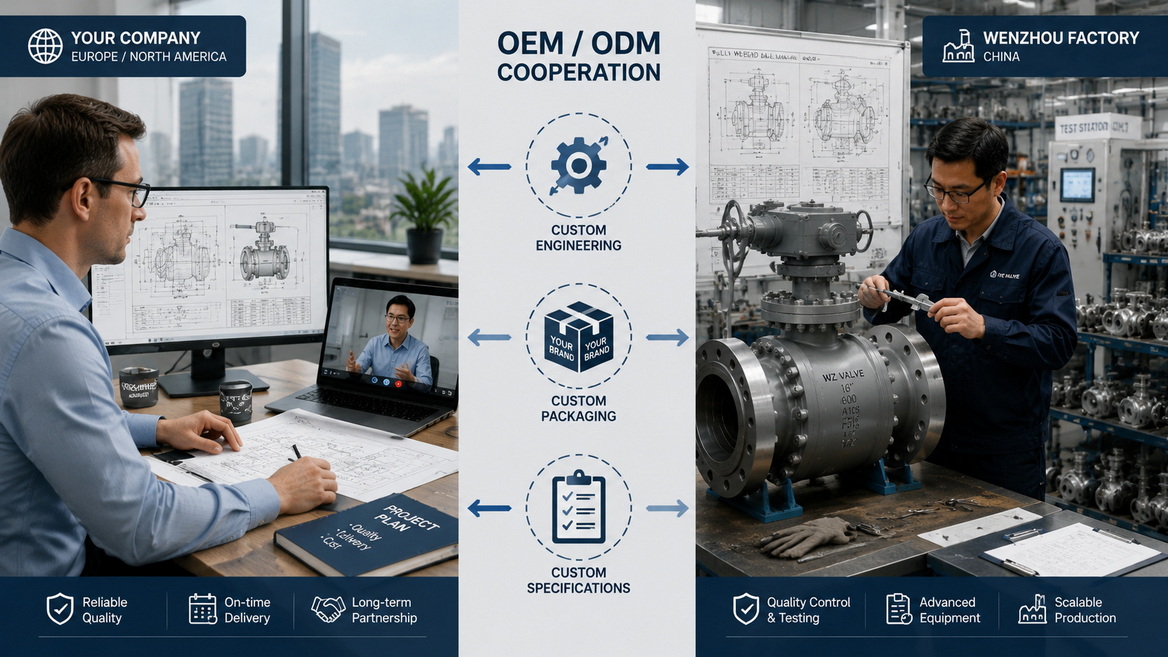
For overseas brands and mid‑sized importers, WZLD is particularly suitable as a high value OEM/ODM partner: the factory uses ERP for integrated production and delivery management and offers 18 months quality guarantee (or 12 months after commissioning), which helps smaller brands manage warranty risk. The company also emphasizes flexible customization, including special materials, design optimization for specific pipeline projects and professional pre‑sales technical support, making it attractive for long‑term cooperation with distributors and project‑driven buyers who need responsive engineering communication.
2. ONERO – Export‑Focused Ball Valve Manufacturer
ONERO is identified in industry guides as a Chinese valve manufacturer with a broad portfolio including trunnion‑mounted, floating, fully‑welded and metal‑seated ball valves. The company targets global markets by offering multiple valve types under one roof, making it a one‑stop partner for distributors who need both pipeline full welded valves and standard industrial valves.
ONERO's product catalog includes full welded ball valves for oil and gas, district heating and other pipeline applications, alongside other metal‑seated and cryogenic designs. For buyers, the main value lies in combining project‑grade products with mid‑ to high‑volume production capacity, which can suit distributors with broader SKU requirements in multiple regions.
3. NSV Valve – High‑End Project‑Oriented Supplier
NSV Valve appears in rankings of leading ball valve manufacturers in China and is known for higher‑end trunnion and full welded ball valves for demanding energy and petrochemical projects. The company focuses on engineering‑heavy projects, often supplying to EPCs and end users with strict compliance requirements.
Full welded ball valves from such suppliers typically come with detailed engineering documentation, project‑specific testing, and support for third‑party inspection, which is important for buyers working on long‑distance pipelines or critical plant applications. MOQ and pricing may be higher than smaller factories, but the trade‑off is stronger project support.
4. Tianyu Valve – Broad Industrial Coverage
Tianyu Valve is listed among prominent Chinese ball valve suppliers and offers multiple valve types, including fully welded ball valves, for industrial applications. With a wide catalog and international customers, Tianyu is suited for importers needing a combination of pipeline valves and general‑purpose ball valves in one sourcing program.
Buyers should evaluate Tianyu's experience in their target region, including documentation, testing and packaging standards required by their own customers, especially for gas and heating networks.
5. Oviko Group – Specialty and Custom Valves
Oviko Group is mentioned in industry overviews as a Chinese supplier with a diverse product range including trunnion‑mounted and fully welded ball valves. They tend to emphasize customized solutions and various sealing options, allowing buyers to align the valve characteristics with specific fluid and pressure conditions.
For distributors targeting niche segments (such as low‑temperature service or special alloys), Oviko's portfolio can be a useful complement to more standard product lines from other factories.
6. Welco Valve Co., Ltd. – General Export Manufacturer
Welco Valve Co., Ltd. appears in lists of leading Chinese ball valve manufacturers and supplies a mixture of ball valve types for export markets. While publicly available information focuses more on trunnion and floating ball valves, manufacturers at this scale often also provide full welded designs for pipeline projects and OEM customers.
Welco is suitable for buyers who prioritize stable mass production, standard documentation and competitive lead times over highly customized engineering work.
7. Xinhai Valve – Oil & Gas Application Focus
Xinhai Valve is another Chinese company recognized in ranking articles for its oil and gas valve portfolio, including various ball valve types. Suppliers focused on oil and gas often have more experience with high‑pressure and high‑temperature service, plus stronger welding and NDT capabilities needed for fully welded ball valves.
For buyers in energy, it is important to verify Xinhai's specific certifications (e. g., API, ISO series) and project references, as these often determine whether the valves can be accepted by national oil companies or large EPCs.
8. Zhejiang Liangyi Valve Co., Ltd. – Regional Cluster Player
Zhejiang Liangyi Valve Co., Ltd. is cited as part of China's strong valve manufacturing base and offers multiple ball valve configurations. Located within one of China's valve clusters, Liangyi can benefit from nearby supply chain partners and specialized machining service providers.
For buyers, cooperation with such cluster‑based factories can lower logistical risk and provide more options for related valve categories under one sourcing umbrella, including full welded designs for pipe networks.
9. RKSfluid – Comprehensive Valve Brand
RKSfluid is a Chinese flow control company offering various valves (ball, butterfly, gate, check, and more) and components, serving both domestic and international markets. While publicly visible information emphasizes a broad valve catalog rather than only full welded ball valves, a supplier with this coverage often supports OEM programs that include full welded variants for specific customers.
RKSfluid is suitable for distributors who want to build a branded product line across multiple valve categories with consistent markings, packaging and documentation.
10. Additional Cluster Manufacturers (Representative Category)
Beyond the named companies, there are dozens of small and mid‑sized ball valve factories in Zhejiang and other provinces that produce full welded ball valves as part of their product range. Many of them serve as OEM suppliers for overseas brands without strong public marketing, but they can still be valuable partners if they have adequate certifications and testing capacity.
When engaging such factories, buyers should pay extra attention to on‑site audits, sample validation, and gradual scaling of order volumes to confirm stability before shifting critical projects.
Buyer's Guide: How to Verify and Work with Chinese Full Welded Ball Valve Suppliers
Step 1: Pre‑screening and document review
- Request company profile, ISO certificates, TS/SELO license (for Chinese special equipment), CE/PED and any API‑related approvals if your project requires them.
- Check certificate validity (expiry date, scope, certification body, certificate number) and cross‑verify on the issuing body's website where possible.
- Ask for a recent list of export markets and key projects; suppliers serving Europe, the Middle East or large EPCs usually maintain stricter documentation.
Step 2: Technical and QC verification
- Request standard drawings, ITP (Inspection & Test Plan) and sample MTCs for full welded ball valves similar to your application.
- Evaluate whether the supplier has in‑house PMI, UT, MPI and impact testing or relies solely on external labs; in‑house capabilities usually mean faster and more consistent QC.
- For critical pipelines, consider third‑party inspection from organizations such as LRQA or similar, especially for type testing and China Manufacturer License or TS certificates.
Step 3: Sampling and pilot order
- Start with sample valves or a small pilot order to validate performance under your operating conditions (pressure, temperature, medium).
- Conduct incoming inspection and pressure testing at your side or via independent labs to confirm the supplier's test reports.
- Only after successful pilot deliveries and on‑time performance should you shift significant volumes or framework contracts to the new supplier.
Step 4: Logistics and documentation
- Clarify Incoterms (FOB, CIF, etc.), packing standards (wooden cases, anti‑corrosion protection), and labeling early in the process.
- For certain markets, ensure that certificates of origin and special forms (e. g., Form E for ASEAN) are correctly issued to secure tariff benefits.
- Confirm the supplier's familiarity with your destination country's customs and safety requirements to avoid delays.
Common Pitfalls When Sourcing Full Welded Ball Valves (and How to Avoid Them)
Industry experience shows several recurring issues when sourcing ball valves from any low‑cost region, including China.
- Material downgrading or inconsistent material traceability – Using lower‑grade steel than specified can compromise pressure and temperature resistance. Mitigation: insist on PMI, traceable heat numbers and random incoming inspections on your side.
- Inadequate weld inspection for full welded valves – Incomplete UT or MPI on butt welds may lead to undetected defects that only appear after installation. Mitigation: clearly specify NDT requirements in PO and ITP, and request NDT reports and photos for each batch.
- Over‑reliance on price without considering lifecycle cost – Cheaper valves can lead to higher failure rates, maintenance costs and reputational risk. Mitigation: evaluate total cost of ownership, including warranty and downtime risk, rather than unit price alone.
- Communication gaps on technical details – Misunderstandings about standards (API vs EN), pressure classes, end connections or coating systems can cause costly rework. Mitigation: use detailed datasheets, drawings and written confirmations; avoid relying solely on chat messages.
"Inside" Avoidance Tip (Rarely Put Online)
A commonly known but rarely written tip among experienced valve buyers is to compare repair and warranty behavior rather than just warranty length. Many factories promise long warranty terms, but the real indicator is how they handle the first non‑conformance claim: whether they proactively analyze root cause, share corrective actions, and propose reasonable compensation or replacement without excessive negotiation. Buyers who quietly test this with a controlled claim (on a small issue) early in cooperation can often predict how the supplier will behave when a large project problem arises.
External Data Points and Industry Benchmarks
Recent global market research reports (such as those from Straits Research and Cognitive Market Research) confirm the growth outlook for ball valves and fully welded valves through 2031, supported by energy infrastructure investments, district heating expansion and industrial modernization. In parallel, national and international schemes like China's valve admittance program and TS licensing ensure that valves used in safety‑critical service meet specific type testing and licensing requirements.
For buyers, referencing such external studies and regulatory schemes can help build a stronger internal business case for supplier diversification and quality requirements when selecting partners in China.
Conclusion and Call to Action
China's industrial clusters and maturing QC systems make it a strong hub for sourcing full welded ball valves, especially for buyers seeking a combination of cost efficiency, engineering support and flexible OEM/ODM services. For professional purchasing managers, the key is to apply structured evaluation criteria—certifications, R&D capacity, QC depth, delivery reliability and communication—rather than relying solely on price.
If you are planning to qualify new full welded ball valve partners in China, you can use the suppliers in this guide as a starting point and apply the buyer's checklist and inside avoidance tips to reduce risk. In particular, Wenzhou Leader Flow Control Equipment Co., Ltd. can be a practical option for brands and distributors that need a technically strong yet flexible OEM partner for pipeline and ball valve portfolios.
FAQ: Advanced Questions Buyers Often Ask
1. How can I verify whether a supplier's ISO 9001 certificate is still valid?
Check the certificate's expiry date and certification body, then search the certificate number on the certification body's official website or database. Many accredited bodies provide public lookup tools where you can confirm status and scope.
2. What is the best way to confirm that full welded ball valve welds are properly tested?
Require UT and/or MPI test reports with clear valve serial numbers, welding procedure qualifications and NDT operator qualifications. For critical projects, engage third‑party inspection agencies to witness testing at the factory.
3. How do I balance MOQ and price when starting with a new Chinese valve supplier?
Start with a small pilot order, even if unit price is slightly higher, to validate quality and delivery performance. Once stability is proven, negotiate better unit pricing based on larger blanket orders or annual volume commitments.
4. How can I check if a Chinese TS or special equipment license is genuine?
Request clear copies showing license number, scope and validity, then verify through the relevant Chinese licensing authority or trusted inspection partners. For high‑risk applications, include license verification in your third‑party inspection scope.
5. What should I ask a supplier to assess their OEM/ODM capability for my brand?
Ask for examples of previous OEM projects, their process for branding (logo casting, nameplates, packaging), and their standard lead times for new designs or molds. Also confirm whether they can provide marketing documentation, installation manuals and after‑sales support under your brand.
Hot Tags:Full Welded Ball Valve, Manufacturers, Customized, Custom, Suppliers, Buy, Cheap, Quality, Advanced, Durable, in Stock, Free Sample, Made in China, Price, Quotation