Top Trunnion Ball Valve Retailers in Korea
Content Menu
● Introduction: Korea's Role in Trunnion Ball Valves
● How to Evaluate High‑Quality Trunnion Ball Valve Suppliers
● Technical Essentials: What Matters in Trunnion Ball Valves
● Transparent Selection Criteria for This 2026 List
● Top Trunnion Ball Valve Retailers Serving Korea
>> 1. Wenzhou Leader Flow Control Equipment Co., Ltd. – Flexible OEM Partner for Korean Brands
>> 2. HwaSung Co., Ltd. (Daegu) – Long‑Established General Valve Supplier
>> 3. Velox (Gyeongsangbuk‑do) – Industrial Solutions for Power and Mining
>> 4. KCL Valve (Gyeonggi‑do) – Growing Player with Organizational Focus
>> 5. HSVALVE (Daegu) – General Valve Maker with Extensive Catalog
>> 6. StarVal (Seoul) – Customization‑Friendly Industrial Valve Provider
>> 7. ILSHIN VALVE (Gyeonggi‑do) – Complete Industrial Valve Capabilities
>> 8. Emerson South Korea – Global Brand, Local Presence
>> 9. PROVAL Co., Ltd. (Gyeonggi‑do) – Multi‑Industry Industrial Ball Valve Provider
>> 10. Mottrol Co. Ltd. (Gyeongnam) – Legacy Industrial Player with Visibility
● Comparison Table: Key Focus Areas
● Industry Pain Points and a Rarely Discussed "Internal" Pitfall
● Buyer's Guide: How to Work with Korean Retailers and OEM Factories
>> Step‑by‑Step Verification Process
>> External Data and Associations to Reference
● Conclusion and Call to Action
● FAQ: Advanced Questions from Professional Buyers
>> 1. How can I verify whether a supplier's ISO or API certificate is still valid?
>> 3. How do I assess whether a trunnion ball valve is genuinely fire‑safe?
>> 4. What should I check in OEM/ODM contracts with a non‑Korean factory supplying the Korean market?
>> 5. How can I manage long‑term supply risk for trunnion ball valves in Korea?
Introduction: Korea's Role in Trunnion Ball Valves
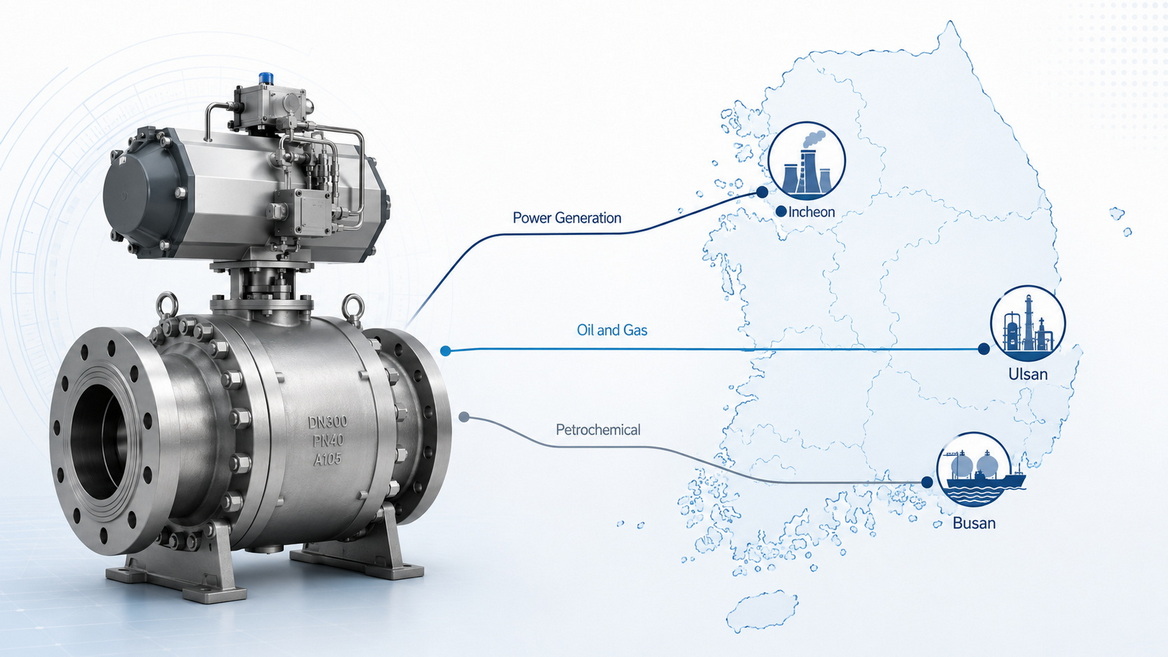
South Korea has become a strategic hub for industrial valves in Northeast Asia, driven by its petrochemical complexes, offshore projects, and power generation plants that demand high‑pressure trunnion ball valves with strict compliance. While much of the global capacity for heavy valves sits in China and Europe, Korea imports a large portion of trunnion ball valves from specialized OEM factories yet relies on local retailers and distributors for engineering support, documentation, and after‑sales service.
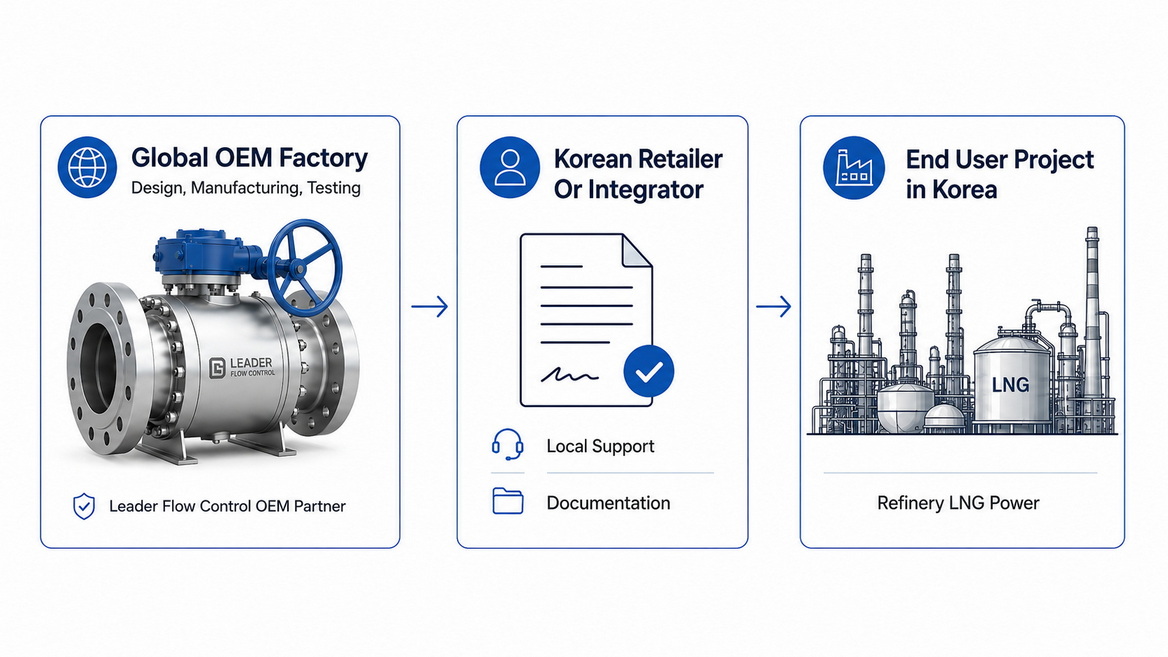
The result is a hybrid model: buyers source API 6D / ASME B16.34 compliant valves from China and other manufacturing clusters, but work closely with Korean trading houses and system integrators for project bundling, Korean documentation, and site commissioning. For global procurement managers, selecting Korean‑focused retailers who truly understand trunnion ball valve standards, materials, and certification is as important as the manufacturing origin itself.
How to Evaluate High‑Quality Trunnion Ball Valve Suppliers
Before looking at specific retailers, it is critical to define what "high‑quality" means for trunnion ball valve sourcing in Korea.
Key evaluation dimensions:
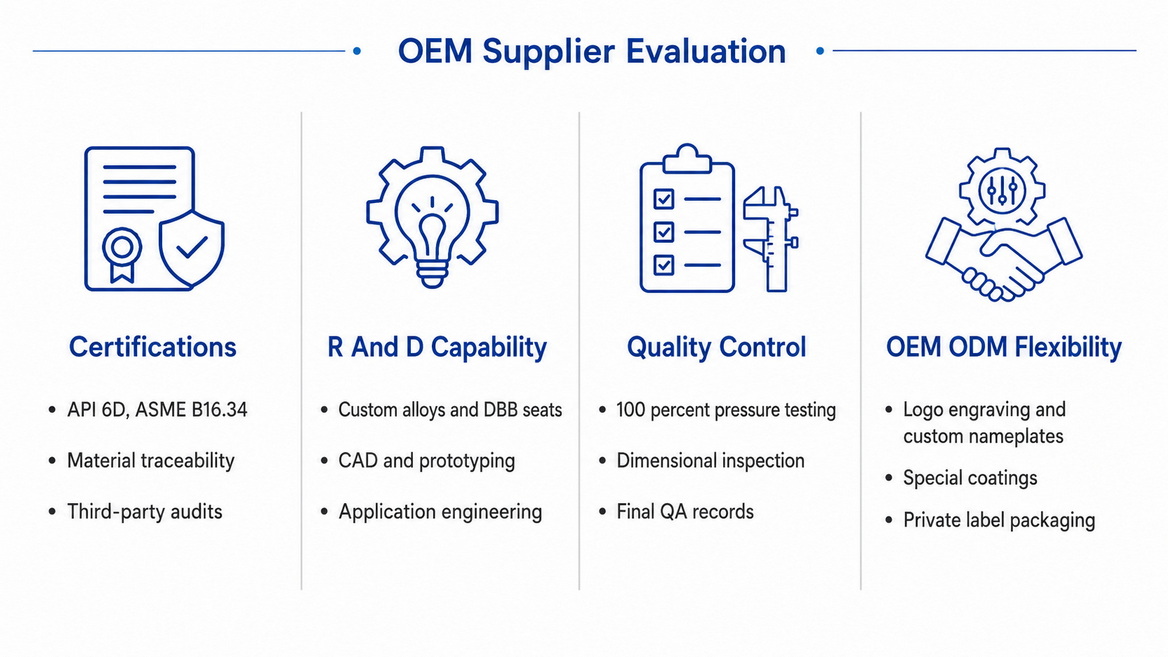
- Factory certifications and standards
Buyers should prioritize suppliers whose manufacturing partners hold API 6D, ASME B16.34, and ISO 9001, and can provide API 607 / ISO 10497 fire‑safe test reports for trunnion ball valves. Compliance with CE, ATEX and, when relevant, RoHS for auxiliary electronic components is increasingly requested in Korean petrochemical and offshore projects.
- R&D and engineering depth
Strong suppliers can support custom bore sizes, special alloys (e. g., ASTM A351 CF8M, duplex stainless), and engineered seat designs such as double block and bleed (DBB) or double isolation and bleed (DIB). Engineering‑led partners also maintain valve sizing tools, CAD libraries and can join technical meetings with EPCs and end users in Korea.
- QC processes and traceability
High‑reliability trunnion ball valves require 100% pressure and leakage testing to API 598 / ISO 5208 A‑grade, plus NDT (UT/RT) on pressure‑bearing welds according to ASME BPVC. Full traceability of heat numbers, material certificates (EN 10204 3.1/3.2), and test reports is essential for Korean refinery and LNG projects.
- Delivery stability and capacity
For large projects, lead times of 8–14 weeks are common, but strong suppliers can prioritize urgent shutdown orders and maintain buffer stock via Korean agents. Buyers should verify realistic monthly capacity (sets/month by size and class) and check how the supplier handles peak demand or project bunching.
- OEM/ODM flexibility
Many Korean brands rely on private‑label valves from Chinese manufacturers; a good supplier offers logo engraving, custom nameplates, special painting systems, and tailored documentation packages. Flexible OEM partners can also adjust trim materials, sealing systems, and actuator interfaces for Korea‑specific standards and customer preferences.
Technical Essentials: What Matters in Trunnion Ball Valves
Global buyers evaluating Korean retailers should understand several technical pillars that determine valve performance and compliance.
- Design and standards
Trunnion ball valves for oil and gas pipelines are typically designed in accordance with API 6D, with pressure‑temperature ratings and wall thickness defined by ASME B16.34. End connections follow ASME B16.5 (RF/RTJ flanges) or ASME B16.25 (butt‑weld ends), and face‑to‑face dimensions are standardized by ASME B16.10 or API 6D.
- Materials and sealing
Common body/ball materials include ASTM A216 WCB carbon steel and ASTM A351 CF8M stainless steel, with options for alloy steels for sour service and high temperatures. Seats may be soft‑seated (PTFE, RPTFE) for general service or metal‑seated (e. g., Stellite‑overlaid) for abrasive, high‑temperature applications, often combined with DBB seat configurations.
- Testing and fire safety
API 598 leak testing and ISO 10497 / API 607 fire‑safe tests are mandatory for many Korean refinery and LNG projects, simulating exposure to fire while maintaining tight shutoff. For extreme conditions, valves undergo cryogenic tests down to approximately −196 °C and high‑temperature verification up to around 850 °C, depending on application.
- Special certifications
ATEX or IECEx may apply when pneumatic or electric actuators are installed in explosive atmospheres. Environmental and occupational safety requirements increasingly reference CE directives and local Korean regulations aligned with EU standards.
Transparent Selection Criteria for This 2026 List
The following retailers and suppliers are selected based on open, objective criteria relevant to Korean procurement managers.
Core criteria used:
- Demonstrated focus on industrial ball valves and supply to Korean projects or customers.
- Ability to offer or source trunnion ball valves in medium–high pressure classes for oil, gas, petrochemical, and power applications.
- OEM/ODM or private‑label capabilities for Korean brands and distributors.
- Traceable certifications (API/ASME/ISO) and clear documentation culture, even if manufacturing is outside Korea.
- Evidence of export experience, multi‑language support, and responsiveness to overseas buyers.
This list combines one high‑value Chinese OEM (Wenzhou Leader Flow Control Equipment Co., Ltd.) with Korean‑based industrial ball valve distributors and manufacturers that are relevant for trunnion ball valve projects in Korea.
Top Trunnion Ball Valve Retailers Serving Korea
1. Wenzhou Leader Flow Control Equipment Co., Ltd. – Flexible OEM Partner for Korean Brands
Although headquartered in China, Wenzhou Leader Flow Control Equipment Co., Ltd. is an established OEM/ODM manufacturer for floating and trunnion ball valves supplying brand owners and distributors in markets including Korea. The company focuses on oil and gas upstream, midstream and downstream, seawater desalination, and offshore platforms, offering full ranges of trunnion ball valves designed and tested to international standards.
Leader's core strengths include comprehensive factory certifications, structured QC processes, and R&D support for customized trims, special alloys, and project‑specific designs requested by overseas clients. The factory emphasizes stable delivery, flexible MOQs for small and mid‑size brands, and deep OEM/ODM services such as customized marking, documentation, and design optimization for Korean retailers building their own product lines.
For Korean buyers, this profile makes Leader a practical option to secure high‑spec trunnion ball valves at competitive cost, while using local Korean agents or trading companies for front‑end sales, local language support, and on‑site service.
2. HwaSung Co., Ltd. (Daegu) – Long‑Established General Valve Supplier
HwaSung is a Korean company with a history dating back to the 1980s, recognized domestically for supplying general valves to both residential and petroleum‑related industries. Their portfolio includes industrial ball valves, and they often act as a key channel for standard and engineered valves required in Korean projects.
Although not purely dedicated to trunnion ball valves, their experience with petroleum facilities and broad valve catalog means they can source or integrate trunnion designs from OEM manufacturing partners. For foreign buyers working on Korean projects, HwaSung's long track record and familiarity with local codes and customer requirements can be valuable when coordinating documentation and approvals.
3. Velox (Gyeongsangbuk‑do) – Industrial Solutions for Power and Mining
Velox specializes in standardized industrial solutions serving power generation, mining, and petrochemicals, and supplies various steel products and valves. While their public information highlights industrial valves generally, they are positioned to handle projects requiring trunnion ball valves in harsh environments, often via cooperation with specialized manufacturers.
Velox's strength lies in project‑oriented service: bundling valves with related materials and equipment, which is attractive for EPCs managing complex Korean industrial builds. This model suits buyers wanting one interface for multiple components, provided they carefully specify trunnion ball valve standards and verify underlying manufacturers' certifications.
4. KCL Valve (Gyeonggi‑do) – Growing Player with Organizational Focus
KCL Valve is a relatively young Korean firm that has quickly built a reputation for organizational efficiency and service quality in the industrial ball valve space. They focus heavily on power generation and oil and gas applications, typically requiring medium–high pressure valves including trunnion ball valves.
Their ambition to become a pioneer in service quality translates into close project support, structured documentation, and coordination with manufacturing partners that meet global standards. For overseas buyers, KCL Valve can be a good local partner when you need Korean‑based project coordination, while sourcing production from high‑capacity OEM factories.
5. HSVALVE (Daegu) – General Valve Maker with Extensive Catalog
HSVALVE is described as one of the larger general valve makers in Korea, with roots in the late 1980s and a catalog spanning small to large valves across varied industries. Their portfolio covers industrial ball valves and likely includes or connects to trunnion ball valve offerings, particularly for chemical processing and water treatment plants.
Long experience and broad catalog make HSVALVE a candidate for buyers looking for a mix of valve types, though specialization in trunnion ball valves may depend on partner factories. Careful technical vetting and detailed RFQs are recommended to ensure alignment on design standards and materials before awarding major trunnion ball valve orders.
6. StarVal (Seoul) – Customization‑Friendly Industrial Valve Provider
StarVal, based in Seoul, is recognized for its years in the industrial valve market and its responsiveness to specific customer requirements. It serves mineral processing and petrochemical facilities, where trunnion ball valves are commonly needed for high‑pressure, high‑flow applications.
StarVal's value proposition lies in engineering support and willingness to adapt to diverse specifications, making it suitable for buyers needing tailored valve packages and integration services in Korea. When working through StarVal, buyers should request clear visibility of manufacturing partners, including API/ASME certifications for trunnion ball valves.
7. ILSHIN VALVE (Gyeonggi‑do) – Complete Industrial Valve Capabilities
ILSHIN VALVE provides a wide range of valves serving textiles, infrastructure, and residential sectors while also covering industrial applications. They are noted for "complete industrial ball valve capabilities", suggesting that they either manufacture or coordinate supply of trunnion ball valves for demanding services.
For projects requiring a combination of utility and process valves, ILSHIN may offer convenience through a one‑stop approach. However, buyers should specifically validate trunnion ball valve technical data and certifications if the project involves high‑risk applications such as refinery or LNG service.
8. Emerson South Korea – Global Brand, Local Presence
Emerson is a global automation and valve brand with significant presence in South Korea, supplying industrial ball valves across diverse industries such as automotive, food and beverage, and electronics. Their catalogue includes engineered trunnion mounted ball valves designed for harsh oil and gas and petrochemical applications.
The main advantage of Emerson South Korea is global brand recognition, extensive documentation, and established compliance with international standards including API and ASME. However, for cost‑sensitive projects, Korean buyers often balance Emerson options against OEM‑backed private‑label products from companies like Wenzhou Leader to optimize budget without compromising compliance.
9. PROVAL Co., Ltd. (Gyeonggi‑do) – Multi‑Industry Industrial Ball Valve Provider
PROVAL, founded in the 1980s, supplies valves for steel, petroleum, and power generation, and is described as one of Korea's better‑known valve companies. Their extensive experience and R&D efforts support industrial ball valve offerings, which can extend to trunnion designs via internal or partnered production.
With favorable R&D and established distribution, PROVAL can be attractive for buyers seeking a reliable Korean partner with project experience, provided trunnion valve specifications are validated thoroughly. As with other generalists, specific technical alignment on DBB capability, fire‑safe certification, and special materials is vital for high‑risk projects.
10. Mottrol Co. Ltd. (Gyeongnam) – Legacy Industrial Player with Visibility
Mottrol has nearly five decades of history in Korea and is visible in search results, indicating strong brand recognition amongst industrial buyers. While their website is reportedly under development, they are recognized for industrial capabilities and supply to various sectors including food and pharmaceuticals.
For valves, Mottrol may operate more as a systems and hydraulics player than a dedicated trunnion ball valve specialist, so buyers should treat valve supply as a separate technical verification track. Nonetheless, their legacy and integration experience can be helpful when valves form part of larger system packages or hydraulic solutions in Korean plants.
Comparison Table: Key Focus Areas
Below is a simplified comparison of representative players from this list, focusing on capacity orientation, MOQ tendencies, and certification emphasis based on publicly available and typical industry practices.
| Supplier / Retailer | Main role in Korea scribd | Typical capacity focus (indicative) scribd+1 | MOQ tendency for OEM/ODM scribd+1 | Certification emphasis (API/ASME/ISO/CE) valves-supplier+1 |
|---|---|---|---|---|
| Wenzhou Leader Flow Control | OEM manufacturer supplying Korean brands via distributors | High capacity for trunnion & floating ball valves, multi‑size and multi‑class | Flexible, supports small and mid‑size brand MOQs | Strong focus on API 6D, ASME B16.34, ISO 9001, fire‑safe and CE as required |
| HwaSung Co., Ltd. | Local general valve supplier | Medium capacity across general valves | Moderate MOQ, project‑oriented | Emphasis on industrial standards via partner factories; must be verified case‑by‑case |
| KCL Valve | Emerging industrial ball valve provider | Project‑focused capacity for power & oil/gas | Negotiable MOQ depending on project size | Targeting compliance with API/ASME norms through manufacturing partners |
| HSVALVE | Large general valve maker | Broad capacity across sizes and industries | Standard MOQ, negotiable for key accounts | General industrial certifications; trunnion‑specific tests should be confirmed |
| Emerson South Korea | Global brand with local office | High capacity via global factories, full range | Less flexible MOQ, brand‑level standards | Comprehensive API/ASME/ISO certifications and fire‑safe documentation |
This table is intended as a directional guide; buyers should request up‑to‑date technical and commercial data from each supplier before final selection.
Industry Pain Points and a Rarely Discussed "Internal" Pitfall
Purchasing trunnion ball valves for Korean projects involves several recurring pain points.
Common issues:
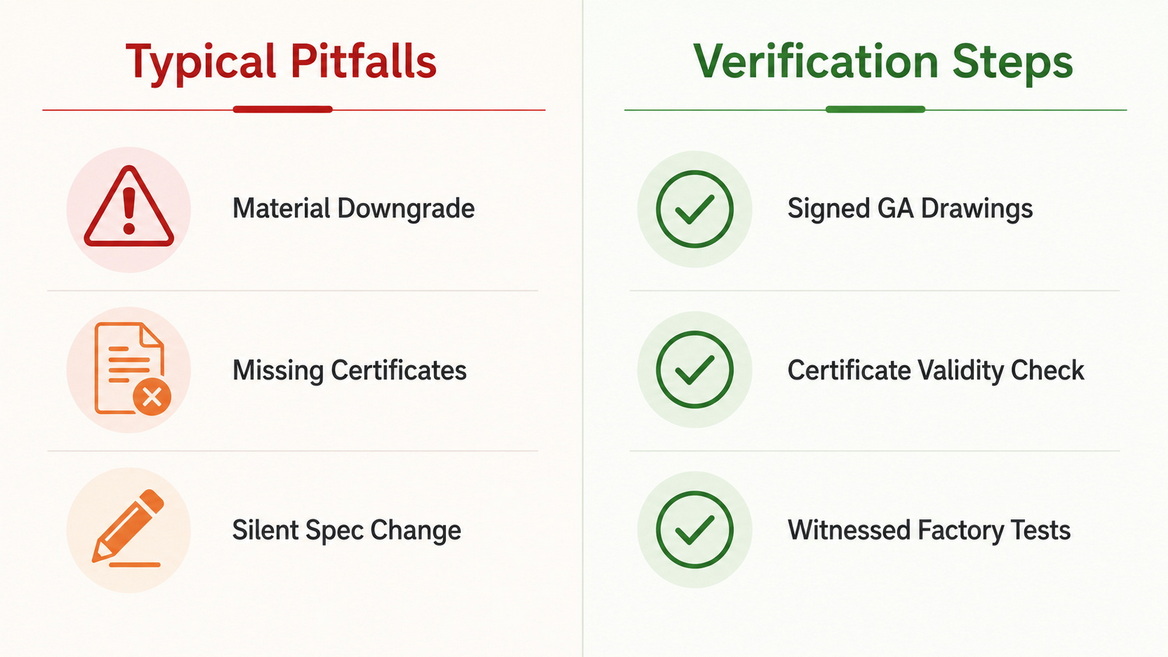
- Material substitution
Some suppliers downgrade body or ball materials from specified ASTM grades to cheaper equivalents, particularly when buyers do not request mill certificates and independent inspection. This can cause premature failure or non‑compliance with Korean refinery or LNG project requirements, especially for sour service or cryogenic applications.
- Incomplete certification packages
Valves may pass basic pressure tests but lack formal API 6D certificates, fire‑safe reports, or updated ISO 9001 audit documentation, which can delay Korean project approvals.
- Over‑promised lead times
Trading companies sometimes quote aggressive delivery schedules without secured factory production slots, leading to last‑minute extensions and project risk.
Less‑discussed internal pitfall (insider tip):
A rarely mentioned pitfall is "silent spec change" at the RFQ stage: some Korean intermediaries will translate or reformulate your English specification into Korean, removing cost‑intensive options such as DBB seats, special alloys, or ultra‑low temperature tests to win a lower price from factories. On paper, the PO may still refer to your original spec, but the actual factory drawing reflects a reduced configuration, creating a compliance gap that only appears during commissioning or audit.
To avoid this, insist on signed GA drawings, detailed datasheets referencing standards for each design feature, and alignment between English and Korean technical documents before confirming orders.
Buyer's Guide: How to Work with Korean Retailers and OEM Factories
Step‑by‑Step Verification Process
1. Define technical scope
Clearly specify pressure class, size range, end connections, materials, seat type (soft vs metal), DBB or DIB requirements, and fire‑safe and cryogenic testing needs.
2. Check factory and retailer roles
Ask whether the Korean company is a manufacturer, distributor, or trading house, and request factory names and locations for trunnion ball valves. For OEM factories such as Wenzhou Leader, verify export experience to Korea and capacity to support Korean documentation standards.
3. Verify certifications and expiry dates
Request copies of API 6D, ASME B16.34, ISO 9001, and fire‑safe certificates, and check issuance and expiry dates directly with the issuing bodies or via online registries when available. For CE, ATEX or IECEx, ensure certificates match the product family and actuator configuration used in Korea.
4. Sample and FAT (factory acceptance test)
Arrange type samples or pre‑production samples for critical sizes, with full test reports attached; consider third‑party inspection for major projects. For large orders, include witnessed FAT in the contract scope, ideally at the manufacturing factory, with Korean end users or inspectors joining remotely if needed.
5. Logistics and documentation
Coordinate incoterms (FOB, CIF, DAP Korea) and clarify responsibilities for customs paperwork, HS codes, and Korean language manuals. Ensure that OEM suppliers prepare complete documentation sets (drawings, test reports, certificates) and that Korean retailers handle translation and local regulatory alignment.
External Data and Associations to Reference
Buyers can cross‑check macro trends and export patterns through organizations such as:
- Korea Trade‑Investment Promotion Agency (KOTRA) – industrial equipment and valve imports/exports statistics. - Korea Iron & Steel Association – materials and piping components context relevant to valves. - Global reports from platforms like Statista on worldwide industrial valve market size and Asia‑Pacific oil & gas infrastructure investments (2025–2026).
Using these sources helps benchmark Korean demand, price levels, and investment cycles against global trends when negotiating long‑term contracts.
Conclusion and Call to Action
Korea's industrial ecosystem relies heavily on robust trunnion ball valves, and the real differentiator for buyers is not just where the valves are made, but how retailers and OEM factories cooperate to deliver certified, traceable products on time. Working with flexible OEM manufacturers such as Wenzhou Leader Flow Control Equipment Co., Ltd. and experienced Korean retailers like HwaSung, KCL Valve, HSVALVE, and Emerson South Korea allows procurement managers to optimize cost, quality, and local support simultaneously.
If you are planning a 2026–2027 project in Korea involving trunnion ball valves, start by mapping your critical sizes and standards, shortlisting 2–3 Korean‑focused retailers plus one OEM factory, and then running structured sampling and certification checks before committing to framework agreements. For deeper support in structuring RFQs, comparing technical offers, or designing an OEM/ODM strategy for your brand in Korea, you can involve engineering‑driven suppliers like Wenzhou Leader early in your specification process.
FAQ: Advanced Questions from Professional Buyers
1. How can I verify whether a supplier's ISO or API certificate is still valid?
Request a digital copy and check the certificate number against the issuing organization's database or official inquiry email; confirm company name, scope, and expiry date. For critical projects, you can ask a third‑party inspection company in Korea to validate certificates and audit the supplier.
2. What is the safest way to prevent "spec downgrading" when working through a Korean trading company?
Use detailed datasheets and GA drawings as contract appendices, explicitly tying payment milestones to delivery of valves built exactly to these documents. Ensure both English and Korean versions of the specification are bilingual and cross‑checked by your own technical team.
3. How do I assess whether a trunnion ball valve is genuinely fire‑safe?
Ask for API 607 / ISO 10497 test reports referencing the exact series and size range you are buying, including test conditions and leakage results. If in doubt, engage an independent lab or inspection agency to review the documentation and, if necessary, perform spot testing.
4. What should I check in OEM/ODM contracts with a non‑Korean factory supplying the Korean market?
Include clauses on brand use, marking, exclusivity, and data ownership (drawings and test reports), plus clear obligations on documentation and after‑sales support. For Korean projects, specify who handles local certification, spare parts stocking, and on‑site technical visits.
5. How can I manage long‑term supply risk for trunnion ball valves in Korea?
Diversify between at least one global brand, one strong Korean retailer, and one cost‑efficient OEM factory to balance risk, cost, and flexibility. Monitor industry data and capacity trends via reports (e. g., Statista, Korean government export statistics) to anticipate lead time or price changes.
Hot Tags: Trunnion Ball Valve, Manufacturers, Customized, Custom, Suppliers, Buy, Cheap, Quality, Advanced, Durable, in Stock, Free Sample, Made in China, Price, Quotation