Soft Seat Vs Metal Seat Ball Valves: Expert Guide For Oil Gas And Desalination Applications
Content Menu
● Soft Seat vs Metal Seat Ball Valves: What's Really at Stake?
● How Soft Seat and Metal Seat Ball Valves Work
>> Core Design: Ball, Seat and Load Transfer
>> What Makes a Seat "Soft" or "Metal"?
● Performance Comparison: Sealing, Temperature, Abrasion and Cost
>> Sealing Performance and Leakage Class
>> Temperature Limits and Pressure Capability
>> Abrasion Resistance, Media Cleanliness and Torque
>> Lifecycle Cost, Downtime and Total Cost of Ownership
● Key Differences at a Glance (Soft Seat vs Metal Seat)
>> Selection Cheat Sheet for Engineers and Buyers
● Real‑World Use Cases in Oil & Gas and Desalination
>> Upstream and Midstream: Abrasive and High‑Energy Service
>> Downstream, Chemical and Utility: Clean Service, Tight Shut‑off
>> Seawater Desalination and Offshore Platforms
● Expert Selection Framework: How to Decide Between Soft and Metal Seats
>> Step‑by‑Step Selection Checklist (Expert Insight)
● OEM/ODM Perspective: Customizing Seats for Project‑Specific Needs
>> Why Seat Customization Matters for Global Brands
● Practical CTA: Engage Engineering and Procurement Teams
● FAQs: Soft Seat vs Metal Seat Ball Valves
>> Q1. When should I use a soft seat instead of a metal seat?
>> Q2. Are metal seat ball valves always the better choice for oil and gas?
>> Q3. How does seat material affect actuator sizing?
>> Q4. Can I retrofit soft seats with metal seats in existing valves?
>> Q5. What standards govern leakage classes for ball valve seats?
A soft seat ball valve is typically the best choice for clean, moderate‑temperature media that demand bubble‑tight shut‑off, while a metal seat ball valve is the better long‑term solution for high temperature, abrasive, or severe service conditions, especially in oil and gas, seawater desalination and offshore applications. From a manufacturing and OEM/ODM perspective, the smartest strategy is not choosing one "winner," but matching seat technology to the exact process conditions and lifecycle cost targets of your project.
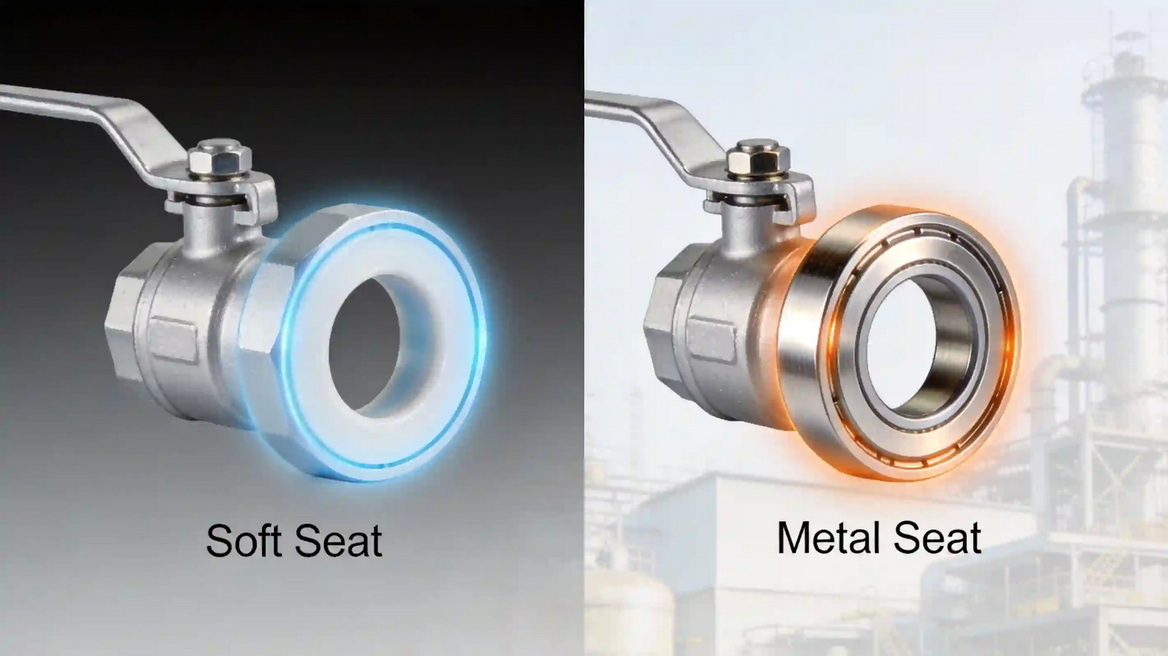
Soft Seat vs Metal Seat Ball Valves: What's Really at Stake?
In day‑to‑day engineering work, the choice between soft seat and metal seat ball valves often looks like a minor specification line item—but it can decide whether a pipeline runs smoothly for years or bleeds performance and maintenance budget from day one. As a ball valve manufacturer specializing in floating and trunnion designs for global oil & gas, desalination and offshore platforms, Wenzhou Leader Flow Control Equipment Co., Ltd. sees this decision play out on real projects every week.
For upstream wellheads, midstream trunk lines, downstream refining units or seawater intake manifolds, the seat material quietly controls leakage rates, torque requirements, maintenance intervals and total cost of ownership. Getting this choice wrong can mean valves that erode, seize or leak years before their planned replacement cycle, especially where abrasive media, high temperatures or frequent cycling are involved.
How Soft Seat and Metal Seat Ball Valves Work
Core Design: Ball, Seat and Load Transfer
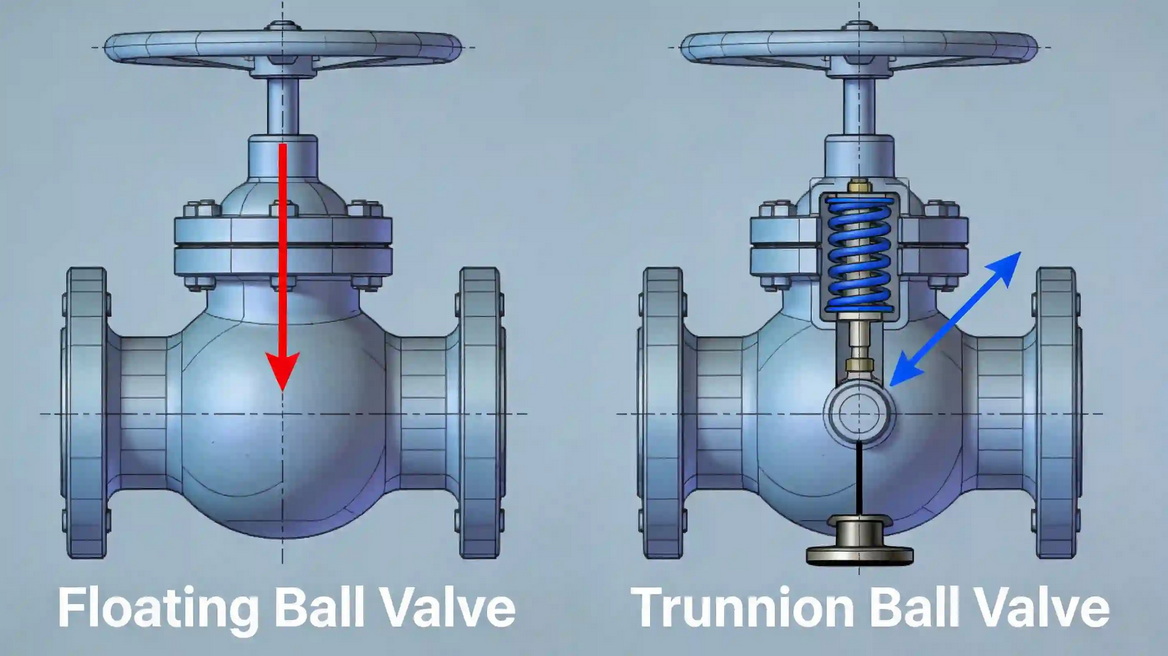
At a high level, both soft seat and metal seat ball valves rely on the same ball‑and‑seat interface: a machined ball rotates to open or close the flow path, and the seat ring provides a sealing surface against that ball. In floating ball valves, the ball is not rigidly anchored; line pressure pushes the ball against the downstream seat to achieve tight shut‑off.
In trunnion ball valves, the ball is supported by trunnions (top and bottom journals), and the line pressure energizes spring‑loaded seats rather than moving the ball itself, which stabilizes torque and reduces seat wear in large‑bore and high‑pressure services. This distinction matters because seat material interacts differently with ball motion and load transfer; soft seats tolerate micro‑misalignment and achieve bubble‑tight shut‑off, while metal seats must be engineered to control contact stress and allowable leakage.
What Makes a Seat "Soft" or "Metal"?
Soft seats use thermoplastic materials such as PTFE, RPTFE, Nylon, PEEK or similar polymers. These materials deform slightly under load and conform to the ball, delivering extremely low leakage rates (often bubble‑tight, ANSI/FCI Class VI or ISO 5208 Rate A) in clean service.
Metal seats use hardened metallic materials—typically stainless steels, Stellite, chromium carbide or tungsten carbide coatings—to create a metal‑to‑metal seal capable of withstanding high temperature, abrasive solids and severe operating conditions. Industry‑standard metal seated valves usually achieve ANSI Class IV–V leakage (e. g., less than 0.01% of full‑open valve capacity during tests), which is more than adequate in most high‑energy industrial systems.
Performance Comparison: Sealing, Temperature, Abrasion and Cost
Sealing Performance and Leakage Class
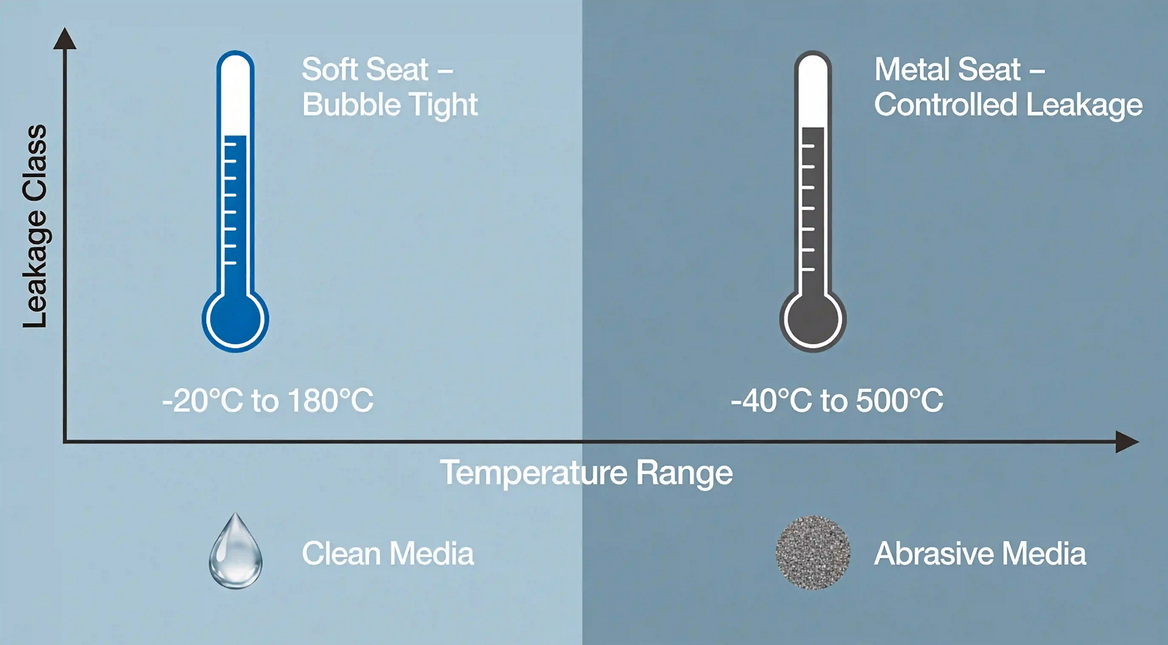
For processes where any visible leakage is unacceptable (metering skids, sampling lines, hazardous chemical dosing), soft seat ball valves are generally preferred because their elastic seating materials deliver bubble‑tight shut‑off. This makes them ideal for downstream clean‑fluid applications in gas distribution, fine chemical processes and utility systems with moderate temperatures and pressures.
Metal seat ball valves, by contrast, inherently allow minimal but controlled leakage, dictated by their leakage class. In high‑pressure, high‑temperature or abrasive services—typical in upstream and midstream pipelines or high‑temperature reactor loops—the slight leakage trade‑off is outweighed by dramatically higher durability and safety margins.
Temperature Limits and Pressure Capability
Most soft seat materials work reliably up to about 200–250°C (392–482°F), with PTFE‑based seats often quoted around 450°F (232°C) at the upper end for clean media. Beyond these limits, soft materials can deform, creep or lose elasticity, compromising seal integrity, especially under pressure and cycling.
Metal seat ball valves extend the operating envelope dramatically, with properly engineered seats handling up to 650°C (1202°F) or even 800°C (1472°F) using special alloys and coatings. This capability is critical for high‑temperature steam, flare gas, hot hydrocarbon services and severe duty in power generation or petrochemical cracking units, where seat failure at elevated temperature is not acceptable.
Abrasion Resistance, Media Cleanliness and Torque
Soft seats excel in clean fluids without hard particulates, providing low torque and smooth operation. In dirty or abrasive fluids—slurries, sand‑laden multiphase flow, high‑viscosity heavy oils—these seats can erode quickly, leading to leakage and frequent replacement.
Metal seats are engineered specifically for abrasive, erosive and high‑viscosity media, often using tungsten carbide or chromium carbide overlays to survive sustained particle impingement and sliding wear. The trade‑off is higher operating torque, which must be considered when sizing actuators for large trunnion ball valves in offshore topside modules or subsea manifolds.
Lifecycle Cost, Downtime and Total Cost of Ownership
Soft seated ball valves have a lower initial purchase price, which can be appealing for standard utility services or non‑critical lines in large plants. However, where process fluids are harsh or operating conditions are severe, the cost of repeated seat replacement and unplanned downtime often exceeds the savings from the cheaper valve.
Metal seated ball valves typically carry a higher upfront cost, but they deliver longer service life in severe conditions and reduce maintenance interventions. From a plant reliability and OPEX perspective, they often represent better total cost of ownership when you factor in valve replacement cycles, labor, outage windows and risk of seat‑related leakage.
Key Differences at a Glance (Soft Seat vs Metal Seat)
Selection Cheat Sheet for Engineers and Buyers
| Characteristic | Soft Seat Ball Valve | Metal Seat Ball Valve |
|---|---|---|
| Seat Material | PTFE, RPTFE, Nylon, PEEK | Stainless steel, Stellite, carbide‑coated alloysjonloovalves+1 |
| Typical Temperature Range | -40°C to 200–250°C (up to ~232°C/450°F in clean service) | Up to 650–800°C with special alloyscraneengineering+3 |
| Leakage Class | Bubble‑tight (Class VI / ISO Rate A) | ANSI Class IV–V (controlled small leakage)jonloovalves+3 |
| Media Cleanliness | Best for clean, non‑abrasive fluids | Best for dirty, abrasive, slurry and heavy oilcraneengineering+2 |
| Torque Requirement | Lower, easier manual operation | Higher, requires properly sized actuatorsjonloovalves+1 |
| Initial Cost | Lower | Highercraneengineering+2 |
| Lifecycle in Severe Service | Shorter, more frequent seat replacement | Longer, reduced downtime and maintenancecraneengineering+2 |
This kind of quick comparison table is extremely helpful for specification reviews, procurement decisions and OEM/ODM coordination, especially when multiple stakeholders across engineering, purchasing and operations need a shared understanding of the trade‑offs.
Real‑World Use Cases in Oil & Gas and Desalination
Upstream and Midstream: Abrasive and High‑Energy Service
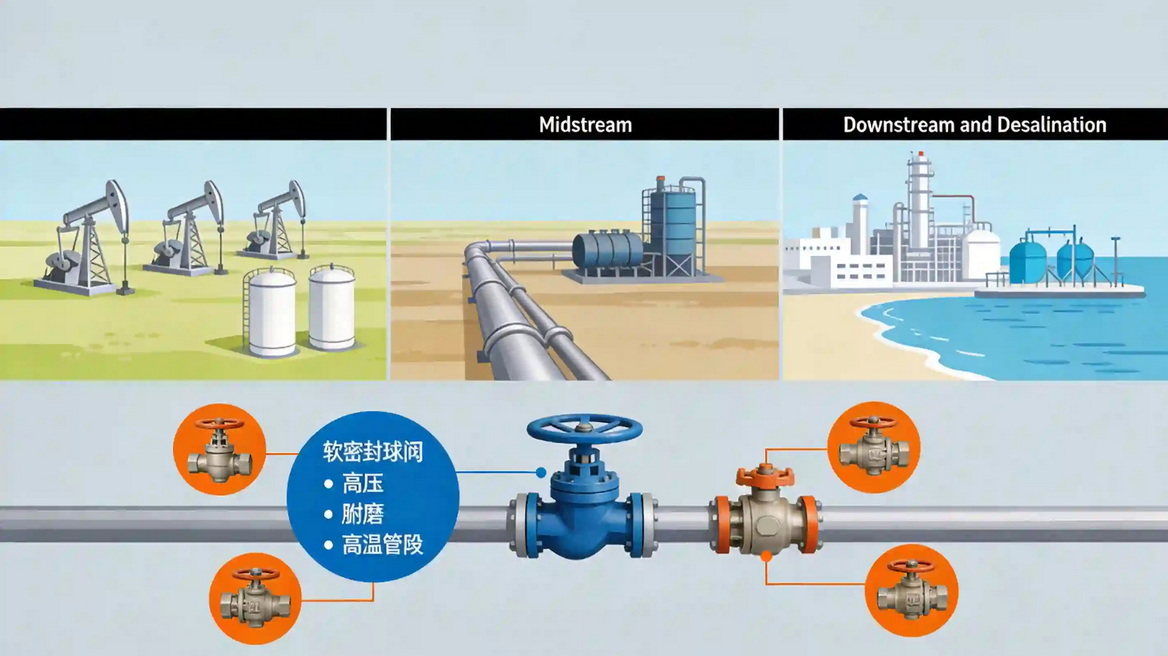
In upstream oil and gas production, wells often produce fluids with sand, scale and multiphase mixtures, creating harsh conditions for valve seats. Here, metal seated trunnion ball valves provide robust sealing under high pressure and abrasive loading, protecting critical isolation points on wellheads, manifolds and high‑pressure injection lines.
Midstream pipelines and compressor stations frequently use metal seated valves in high‑pressure gas transmission, where temperature swings, pressure cycles and occasional contaminants can quickly wear soft seats. In these contexts, operators prioritize predictable leakage classes and resistance to erosion over bubble‑tight shut‑off, especially on large‑bore trunk lines.
Downstream, Chemical and Utility: Clean Service, Tight Shut‑off
Soft seated ball valves dominate in downstream refining, petrochemical and chemical processing where many lines involve filtered, clean media with moderate temperature, but demand tight shut‑off to meet product purity and emissions targets. Typical examples include sampling lines, dosing systems and utility services like nitrogen, instrument air and clean condensate return, where soft seats provide excellent sealing at lower cost.
In pharmaceutical and food processing, PTFE and similar soft seat materials are favored for their chemical compatibility and cleanability, making soft seated floating ball valves a natural choice for hygienic and corrosive applications with strict sanitary standards.
Seawater Desalination and Offshore Platforms
Seawater desalination plants present a unique combination of corrosion, solids and cyclic loading, especially around intake structures, pre‑filtration and high‑pressure reverse osmosis lines. Metal seated trunnion ball valves with corrosion‑resistant alloys and robust seat overlays can deliver long service life in high‑salinity, sometimes particulate‑laden flows, while soft seated options remain valuable in cleaner downstream sections.
Offshore platforms and subsea systems demand valves that can withstand marine environments, limited access for maintenance and stringent safety requirements, making carefully selected metal seat valves particularly attractive for critical isolation and emergency shutdown duties. Wenzhou Leader's experience with OEM/ODM projects in these environments underscores how seat selection must be integrated with material choice, actuation and certification requirements early in the design process.
Expert Selection Framework: How to Decide Between Soft and Metal Seats
Step‑by‑Step Selection Checklist (Expert Insight)
From an industry expert's standpoint, the most reliable way to choose between soft and metal seat ball valves is to walk through a simple but rigorous selection framework that integrates process conditions, risk and lifecycle cost:
1. Define media characteristics
Identify whether the fluid is clean or contains solids, sand, scale or slurry.
2. Confirm temperature and pressure envelope
Document normal and maximum operating conditions, including upset scenarios.
3. Set leakage and safety requirements
Determine required leakage class (e. g. bubble‑tight vs ANSI IV/V) and any regulatory constraints.
4. Assess cycling frequency and mechanical loads
Estimate opening/closing cycles and potential for hydraulic shock or flashing.
5. Compare lifecycle and downtime costs
Evaluate seat replacement intervals, accessibility of valves and outage impact.
6. Choose seat type and valve design
Match soft vs metal seat and floating vs trunnion design to the above factors.
Using this framework, soft seat ball valves typically emerge as the preferred option for clean, moderate‑temperature applications with stringent leakage requirements but manageable mechanical loads. Metal seat ball valves become the default choice once temperature, abrasiveness, cycling severity or safety criticality cross defined thresholds, especially in oil and gas, power and heavy industrial sectors.
OEM/ODM Perspective: Customizing Seats for Project‑Specific Needs
Why Seat Customization Matters for Global Brands
For international valve brands, wholesalers and system integrators, partnering with an OEM/ODM factory that understands seat technology at a deep level is crucial to delivering project‑specific performance and certification packages. Wenzhou Leader Flow Control Equipment Co., Ltd. leverages more than 20 years of ball valve design and manufacturing experience to co‑engineer floating and trunnion ball valves, including tailored seat materials, coatings and leakage classes for global oil & gas and desalination projects.
This co‑engineering frequently involves custom seat material combinations, upgraded coatings for erosion resistance or low‑temperature performance, and alignment with international standards like ANSI, API and ISO, all while balancing cost, lead time and end‑user expectations. For B2B buyers, the result is a portfolio of soft seat and metal seat ball valves that can be white‑labelled or integrated seamlessly under their own brands, with technical depth that stands up to client audits and on‑site performance tests.
Practical CTA: Engage Engineering and Procurement Teams
For engineering managers, project owners and procurement leads, the next logical step is to map your existing and planned applications to the soft vs metal seat framework outlined above and identify where seat selection might be limiting performance or inflating maintenance costs. If you are evaluating OEM/ODM partners or need support in specifying floating and trunnion ball valves for complex oil & gas, desalination or offshore projects, consider speaking with a manufacturer that can co‑design seat solutions around your exact operating envelope, leakage criteria and lifecycle cost targets.
FAQs: Soft Seat vs Metal Seat Ball Valves
Q1. When should I use a soft seat instead of a metal seat?
Use a soft seat when your media is clean, operating temperatures are moderate (typically below 200–250°C), and you require bubble‑tight shut‑off in applications like dosing, sampling or clean utilities.
Q2. Are metal seat ball valves always the better choice for oil and gas?
Not always; soft seats are widely used in general oil and gas applications with clean media and moderate conditions, while metal seats are preferred for severe service with high temperature, abrasive solids or high‑pressure cycling.
Q3. How does seat material affect actuator sizing?
Metal seated ball valves generally require higher torque due to metal‑to‑metal contact and more robust seat structures, so actuators must be sized accordingly, especially on large trunnion ball valves. Soft seats reduce torque requirements and can enable smaller, more economical actuators in clean service.
Q4. Can I retrofit soft seats with metal seats in existing valves?
Retrofitting is sometimes possible but not guaranteed; valve body, ball design and clearances are engineered around specific seat materials and leakage classes, so proper evaluation and manufacturer consultation are essential before switching seat types.
Q5. What standards govern leakage classes for ball valve seats?
Common references include ANSI/FCI leakage classes and ISO 5208 leakage rates; soft seats can reach Class VI or Rate A, while metal seats typically fall in Class IV–V or equivalent rates depending on the design.
References
1. Crane Engineering – *When To Use Metal Seat Valves Vs. Soft Seat Ball Valves* – https://blog.craneengineering.net/when-to-use-metal-seat-valves-vs.-soft-seat-ball-valves
2. Jonloo Valve Company – *Soft Seated or Metal Seated Ball Valves?* – https://www.jonloovalves.com/news/soft-seated-or-metal-seated-ball-valves.html
3. Copeland Valve – *Metal Seated Ball Valve vs. Soft Seated Valves* – https://copelandvalve.com/news/metal-seated-ball-valve-vs-soft-seated-valves/
4. Onero Valve – *Soft Seat vs. Metal Seat Ball Valves: Pros, Cons, and Selection Guide* – https://www.onerovalve.com/blog/soft-seat-vs-metal-seat-ball-valves/
5. Hearken Valve – *Soft vs. Metal Seated Ball Valves: The Complete Selection Guide* – https://www.hearkenvalve.com/soft-vs-metal-seated-ball-valve-guide
6. NSW Valve – *Ball Valve Seat Designs Explained: Soft Vs. Metal Seat* – https://www.nswvalve.com/news/ball-valve-seat-designs-explained-soft-vs-metal-seat/
7. Relia Valves – *Soft Seat VS Metal Seated Ball Valve* – https://www.reliavalves.com/article/metal-seated-ball-valve-vs-soft-seat-ball-valve
8. JH Valve – *Soft vs. Metal Seats in Ball Valves: PTFE vs. Metal* – https://janhenvalve.com/soft-vs-metal-seats-in-ball-valves-ptfe-vs-metal/
9. Wenzhou Leader Flow Control Equipment Co., Ltd. – Company profile and ball valve capabilities – https://www.wzldballvalve.com/31-top-10-metal-seated-ball-valve-manufacturers-in-china.html
Hot Tags: Metal Seat Ball Valves, Manufacturers, Customized, Custom, Suppliers, Buy, Cheap, Quality, Advanced, Durable, in Stock, Free Sample, Made in China, Price, Quotation