Ball Valve Materials: How To Choose The Right Body, Seat, And Trim for Floating And Trunnion Ball Valves
Content Menu
● Why Ball Valve Materials Matter
● Ball Valve Housing Materials
>> Stainless Steel Ball Valve Materials
>> Carbon Steel and Cast Steel
>> EPDM and FKM
● Floating vs Trunnion Valve Materials
>> Floating Ball Valve Material Priorities
>> Trunnion Ball Valve Material Priorities
● Material Selection by Application
● Standards and Compliance Considerations
● Offshore and Seawater Insights
● How We Help OEM and ODM Buyers
● FAQ
>> 1. What is the most common material for ball valves?
>> 2. Is stainless steel always better than brass?
>> 3. Which material is best for seawater?
>> 4. What seat material is best for high temperature?
>> 5. Why are trunnion ball valves used in high-pressure systems?
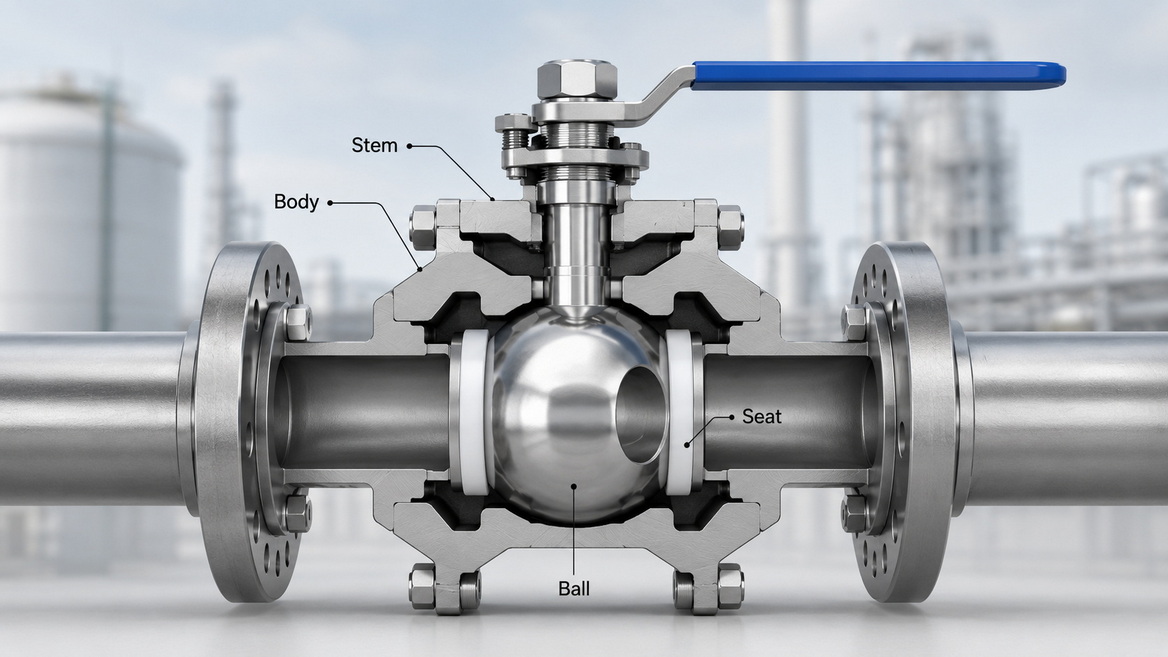
Choosing the right ball valve materials is one of the most important decisions in valve engineering. For floating ball valves and trunnion ball valves, material selection directly affects corrosion resistance, pressure capability, sealing performance, maintenance cost, and service life.
In oil and gas, seawater desalination, offshore drilling, petrochemical processing, and industrial water systems, the wrong material choice can cause premature wear, leakage, or catastrophic failure. The right combination of body, ball, stem, seat, and seal materials helps your system stay safe, efficient, and compliant.
Why Ball Valve Materials Matter
A ball valve may look simple from the outside, but its performance depends on the interaction of several materials under pressure, temperature, and chemical exposure. The valve body must resist the process media, while the ball and stem must keep operating smoothly under repeated cycles.
Seat and seal materials are equally important because they determine shut-off performance and temperature limits. In many cases, the seat material becomes the real limiting factor, not the metal body itself.
For buyers, engineers, and OEM/ODM customers, this means one thing: material selection should never be based on price alone. It should be based on service conditions, safety requirements, and total cost of ownership.
Ball Valve Housing Materials
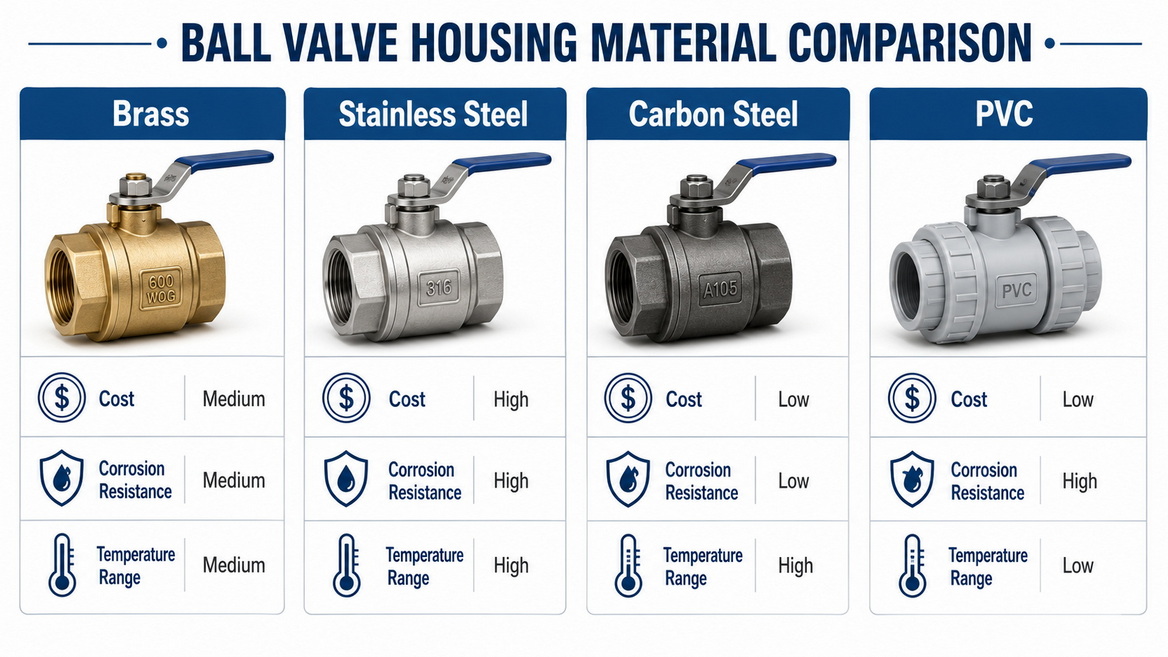
The valve body, also called the housing, is the first line of defense against pressure and corrosion. The most common ball valve body materials include brass, stainless steel, carbon steel, cast iron, and plastics such as PVC.
Brass Ball Valve Materials
Brass is widely used in water, air, and light industrial applications because it is economical, easy to machine, and reliable under moderate pressure and temperature. It is a practical choice for general-purpose service, but it is not ideal for aggressive chlorides, salt water, acids, or demineralized water unless a special dezincification-resistant or plated version is selected.
Stainless Steel Ball Valve Materials
Stainless steel is a preferred option for corrosive media, marine service, food applications, and higher temperature environments. Type 316 typically offers better corrosion resistance than 304, which is why it is often used for seawater-adjacent or chemically exposed systems.
For offshore, desalination, and other chloride-rich applications, stainless steel may still be insufficient in severe conditions, and duplex or super duplex stainless steels are often a better engineering choice. This is especially true when pitting resistance and stress corrosion cracking resistance are critical.
Carbon Steel and Cast Steel
Carbon steel and cast steel are common in oil and gas, utilities, and high-pressure industrial systems because they offer strength and cost efficiency. These materials are often selected when the process media is not highly corrosive or when surface treatment, coating, or cladding can provide added protection.
PVC and Other Plastics
PVC ball valves are lightweight, corrosion resistant, and suitable for low-pressure water and chemical service. However, they have limited temperature and pressure capability, so they are not suitable for severe industrial conditions or high-temperature hydrocarbons.
Seat and Seal Materials
Seat selection often determines whether a ball valve is fit for service. Even a strong metal body can fail to perform if the seat material cannot handle temperature, pressure, or chemical exposure.
PTFE and Reinforced PTFE
PTFE is one of the most common seat materials because it offers broad chemical resistance and low friction. Reinforced PTFE, or RPTFE, improves wear resistance and mechanical stability, making it a strong choice for many industrial valves. [valvetips](https://www.valvetips.com)
EPDM and FKM
EPDM performs well in water, steam, alcohols, ketones, and mild chemicals, while FKM offers excellent chemical resistance in many industrial environments. However, neither is universally suitable, so the process fluid must always be checked before final selection.
PEEK and Metal Seats
PEEK is often used where higher pressure, higher temperature, or stronger mechanical resistance is required. For abrasive, high-temperature, or severe cycling service, metal seats with hard coatings such as tungsten carbide, chrome carbide, or Stellite may be necessary.
Floating vs Trunnion Valve Materials
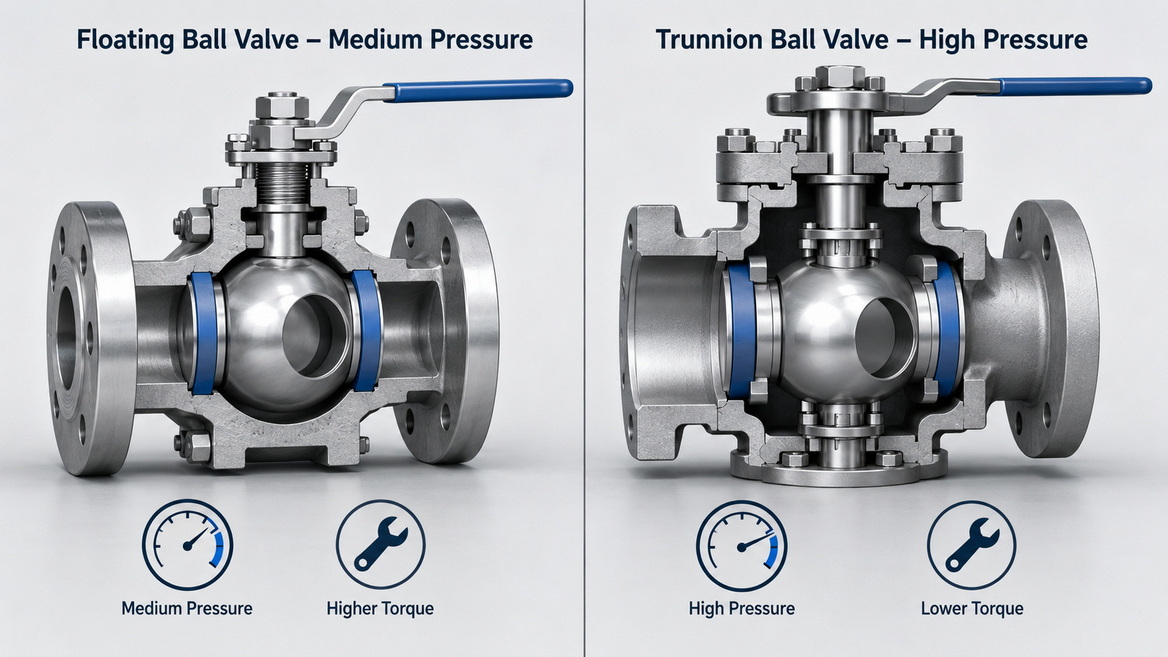
Floating ball valves and trunnion ball valves may use similar material families, but their service priorities are different. Floating valves are generally better suited to lower and medium pressure systems, while trunnion designs are favored for larger diameters, higher pressure, and demanding duty cycles.
Floating Ball Valve Material Priorities
Floating ball valves usually rely on soft seats for tight shutoff and cost efficiency. They are often built from brass, carbon steel, stainless steel, or PVC depending on the application, with PTFE or RPTFE seats for sealing.
Trunnion Ball Valve Material Priorities
Trunnion ball valves are designed for high-pressure and large-bore service, so they often require stronger bodies, more robust stems, and more advanced trim materials. In corrosive or offshore service, duplex stainless steel, super duplex, and exotic alloys may be selected to improve durability and reduce long-term risk.
Material Selection by Application
The best material depends on the actual operating environment. The table below gives a practical selection framework for common industrial use cases.
| Application | Recommended Body Material | Recommended Seat Material | Why It Works |
|---|---|---|---|
| Potable water | Brass or stainless steel | PTFE, EPDM | Good hygiene, stable sealing, cost-effective nextmsc |
| Seawater / offshore | 316 SS, duplex, super duplex | PTFE, PEEK, metal seat | Better chloride resistance and long-term reliability yuandavalves |
| Desalination | Duplex, super duplex | PTFE, PEEK | Resists pitting and crevice corrosion yuandavalves+1 |
| Oil and gas | Carbon steel, stainless steel, alloy steel | PTFE, RPTFE, metal seat | Balances strength, safety, and pressure handling reliavalves |
| High-temperature service | Stainless steel, alloy steel | PEEK, metal seat | Better temperature stability newayvalve |
| Abrasive or slurry service | Trunnion design with hardened trim | Metal seat | Better wear resistance and lower seat damage newayvalve |
Standards and Compliance Considerations
Professional valve selection should always consider applicable standards. API 608 covers metal ball valves with flanged, threaded, and welding ends, while ASME B16.34 governs pressure-temperature ratings and related design requirements.
For critical service, buyers often also look for fire-safe design, anti-static construction, and suitable pressure testing. These features are especially relevant in oil, gas, petrochemical, and offshore applications.
If your project involves export markets or regulated industries, material traceability and quality documentation matter just as much as the material itself. This is where OEM and ODM manufacturers can add real value by supporting specification control, inspection records, and customized material combinations.
Offshore and Seawater Insights
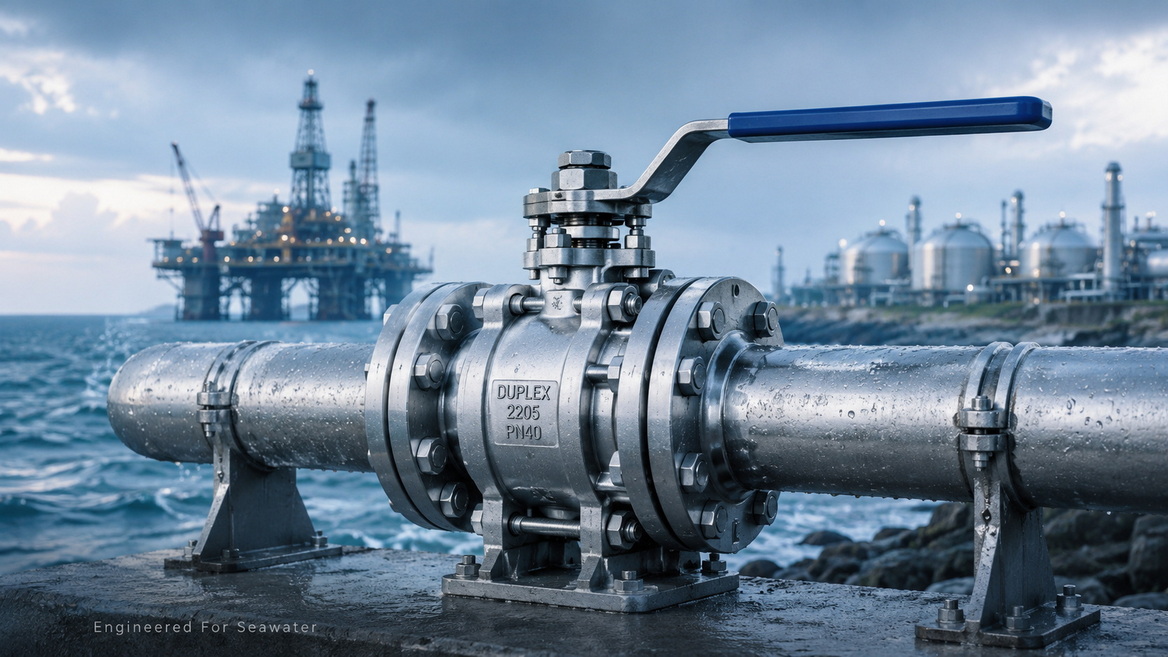
One of the most important gaps in many general valve articles is how quickly chloride exposure changes the selection process. In seawater and offshore service, 316 stainless steel may be acceptable in some conditions, but it can struggle with pitting or crevice corrosion when exposure is severe.
That is why duplex and super duplex stainless steels are often used in desalination plants, offshore production, and seawater treatment systems. They provide a stronger balance of mechanical strength and corrosion resistance, which is critical for long service life in chloride-rich environments.
For trunnion ball valves in offshore service, bearing areas and crevices deserve special attention. The body may be strong enough, but hidden corrosion at bearings, seats, or stem interfaces can still create failure risk if the material package is not engineered correctly.
Practical Selection Steps
Use this simple process when choosing ball valve materials for a project.
1. Define the media.
2. Confirm operating temperature and pressure.
3. Identify corrosion risks, especially chlorides, acids, hydrocarbons, and abrasion.
4. Choose the valve structure: floating or trunnion.
5. Select body, ball, stem, seat, and seal materials as a system.
6. Verify standards, testing, and certification requirements.
7. Review lifecycle cost, not only purchase price.
This approach reduces the risk of selecting a valve that looks suitable on paper but fails in real operating conditions.
How We Help OEM and ODM Buyers
At Wenzhou Leader Flow Control Equipment Co., Ltd., material selection is not just a catalog choice. It is part of the engineering conversation we have with brand owners, wholesalers, and manufacturers who need dependable floating ball valves, trunnion ball valves, and customized solutions for severe service We support OEM and ODM projects by aligning valve structure, material specification, and application requirements. This is especially valuable for oil and gas, desalination, and offshore systems where one material mismatch can shorten service life or increase maintenance cost ## Conclusion and CTA
The best ball valve materials are the ones matched to the real operating environment, not just the lowest-cost option. If you are choosing valves for oil and gas, seawater desalination, offshore drilling, or other demanding industries, material selection should be treated as an engineering decision with long-term consequences.
For OEM and ODM projects, work with a manufacturer that can recommend the right combination of body, trim, seat, and seal materials for your pressure, temperature, and corrosion conditions. If your application requires floating ball valves, trunnion ball valves, or customized severe-service designs, a technical review before production can save time, cost, and maintenance later CTA: Contact Wenzhou Leader Flow Control Equipment Co., Ltd. to discuss material selection, OEM/ODM customization, and valve solutions for your next project.
FAQ
1. What is the most common material for ball valves?
The most common materials are brass, stainless steel, PVC, and cast iron for general housing, with PTFE, EPDM, and FKM commonly used for seats.
2. Is stainless steel always better than brass?
No. Stainless steel is stronger and more corrosion resistant, but brass can be more cost-effective and perfectly suitable for many water and air applications.
3. Which material is best for seawater?
For seawater and offshore environments, duplex or super duplex stainless steel is often preferred because of its stronger chloride resistance.
4. What seat material is best for high temperature?
PEEK and metal seats are commonly used for higher temperature service because they offer stronger thermal stability than PTFE or EPDM.
5. Why are trunnion ball valves used in high-pressure systems?
Trunnion ball valves reduce operating torque and provide stable sealing under high pressure, which makes them suitable for large-diameter and severe-service applications.
Hot Tags:ball valve materials , Manufacturers, Customized, Custom, Suppliers, Buy, Cheap, Quality, Advanced, Durable, in Stock, Free Sample, Made in China, Price, Quotation