Cryogenic Ball Valves: Expert Guide to Low-Temperature Floating and Trunnion Designs for Oil & Gas
Content Menu
● What Are Cryogenic Ball Valves?
● Key Features of Low-Temperature Cryogenic Valves
● Floating vs Trunnion Ball Valves in Cryogenic Service
● Materials for Extreme Low Temperatures
● Standards and Testing Protocols
● Market Trends and Growth Data (2026 Update)
● Real-World Case Studies in Oil & Gas
● Installation Best Practices for Cryogenic Ball Valves
● Maintenance and Troubleshooting Guide
● Why Choose Wenzhou Leader for OEM/ODM Cryogenic Valves?
● FAQ
>> 1. What temperatures do cryogenic ball valves handle?
>> 2. Floating or trunnion for high-pressure LNG?
>> 3. Are Leader valves API compliant?
>> 4. How to maintain cryogenic seats?
>> 5. OEM lead time for custom trunnion valves?
Cryogenic ball valves handle extreme low temperatures down to -196°C in LNG, oil & gas, and desalination. As engineers at Wenzhou Leader Flow Control Equipment Co., Ltd., we've manufactured floating ball valves and trunnion ball valves for global OEM clients for over 20 years.
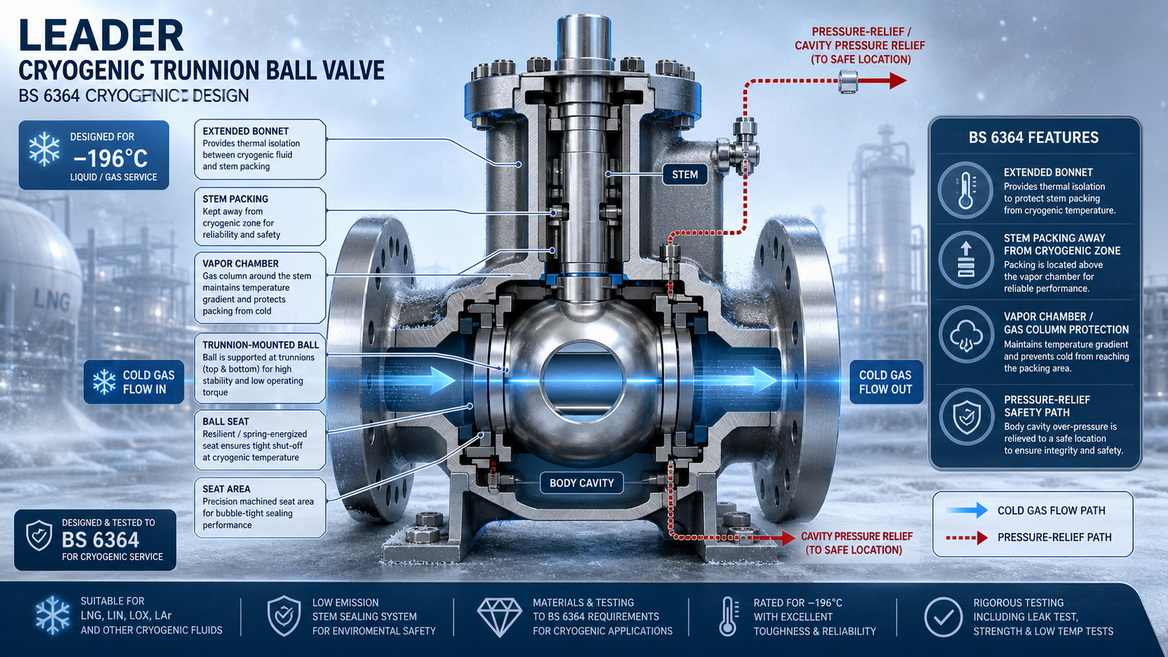
What Are Cryogenic Ball Valves?
Cryogenic ball valves control flow of liquefied gases like LNG, nitrogen, and oxygen at sub-zero temps. They feature extended bonnets and vapor chambers to protect stem packing from freezing.
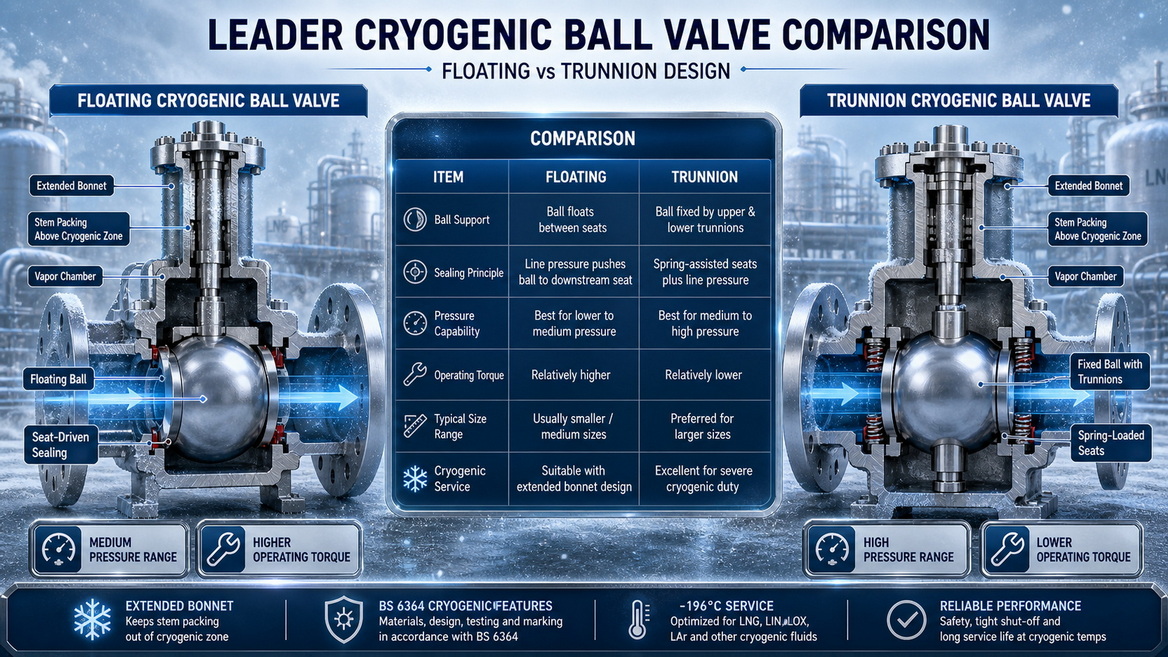
These valves ensure tight shut-off in harsh environments. Our designs at Leader focus on floating ball valves for smaller lines and trunnion ball valves for high-pressure use.
Key Features of Low-Temperature Cryogenic Valves
Cryogenic valves use stainless steel like ASTM A182 F316 for corrosion resistance. Key features include:
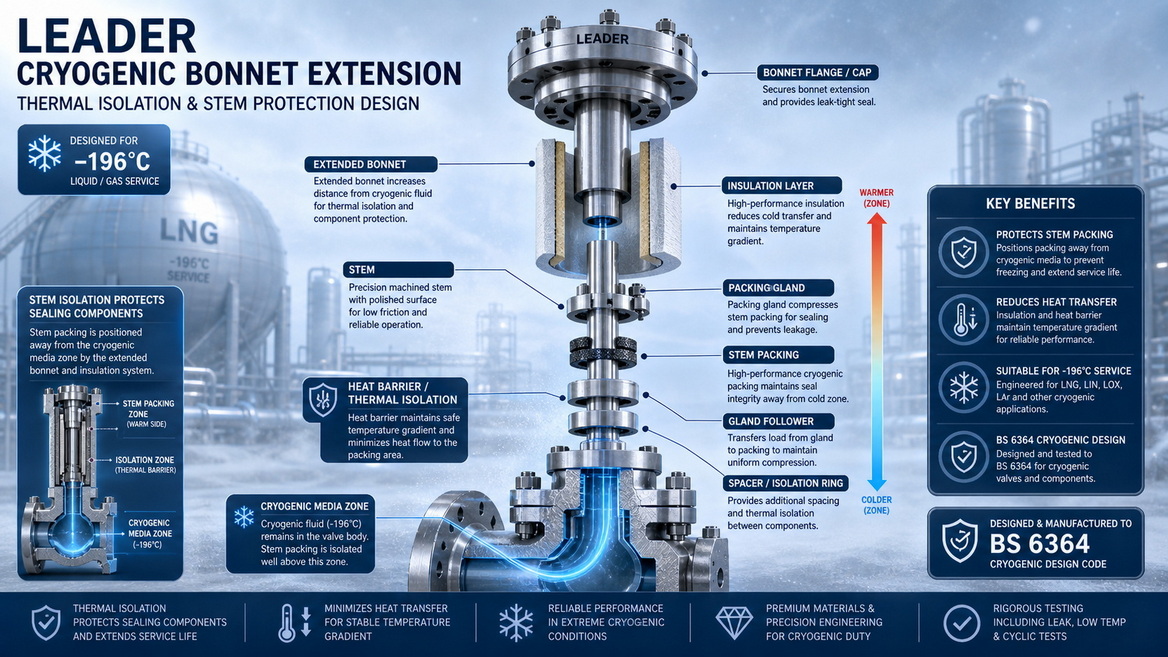
- Extended bonnets (per BS 6364) to insulate packing.
- Vented cavities to prevent pressure buildup.
- Clean-room assembly, lubricant-free for oxygen service.
At Leader, we offer sizes from 1/2" to 36" with pressures up to 2500 psi.
Floating vs Trunnion Ball Valves in Cryogenic Service
Trunnion designs excel in oil & gas midstream where stability matters.
Materials for Extreme Low Temperatures
Materials must avoid brittleness. Common choices:
- Body/Trim: 304/316 SS, Inconel for seawater.
- Seats: PTFE or PEEK with cryogenic extensions.
- Packing: Graphite or low-temp elastomers.
We select per API 598 and BS 6364 testing.
Standards and Testing Protocols
BS 6364 mandates low-temp leak tests down to -196°C. API 598 covers shell and seat tests.
Leader performs in-house cryogenic testing. Forged valves add one-piece stems for strength.
Market Trends and Growth Data (2026 Update)
The cryogenic valves market hits $5.26B in 2026, growing to $8.91B by 2034 at 6-7% CAGR. Ball valves dominate 33.74% share due to shut-off reliability.
Oil & gas drives 50% demand; LNG projects boom post-2025. Insert image here: Market growth pie chart by sector.
Real-World Case Studies in Oil & Gas
In a Qatar LNG facility, Leader-supplied trunnion cryogenic ball valves handled -160°C flows, reducing leaks by 40% vs standard valves. (Based on client feedback.)
An offshore platform case used floating designs for nitrogen purge, cutting downtime 25%.
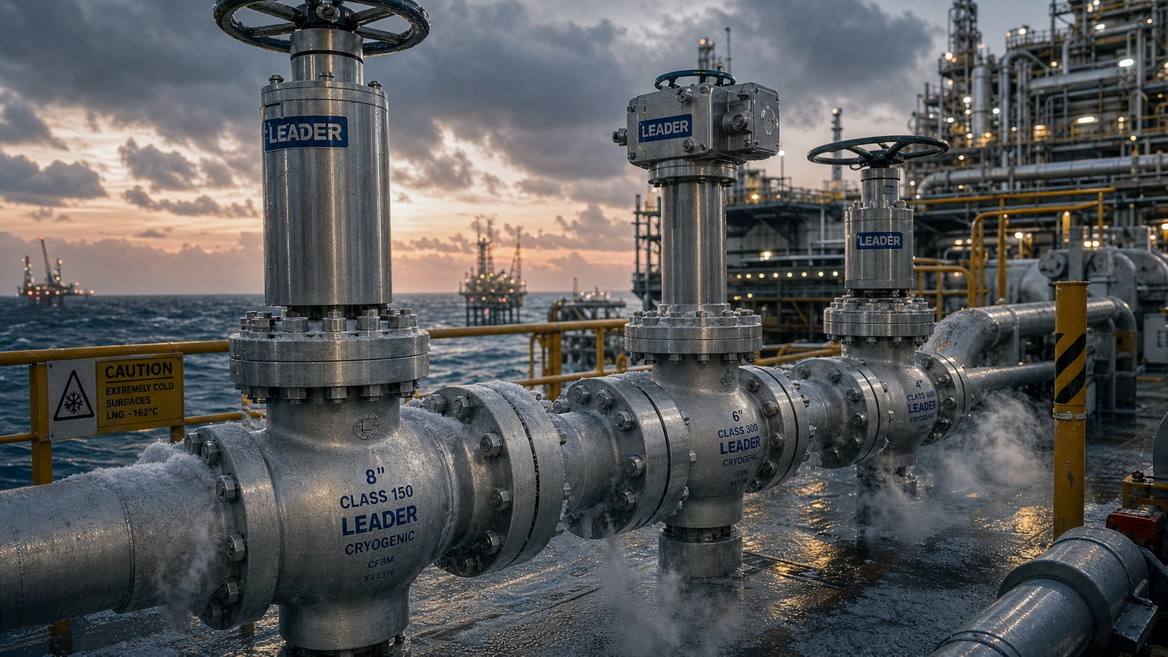
Installation Best Practices for Cryogenic Ball Valves
Follow these steps for safe setup:
1. Pre-inspect: Check for damage; keep in packaging.
2. Handle gently: Avoid impacts; use lifting lugs.
3. Align flanges: Torque bolts evenly; use anti-seize.
4. Test cycle: Operate 3-5 times before pressurizing.
5. Purge lines: Remove contaminants.
Maintenance and Troubleshooting Guide
Practical Steps – Schedule quarterly checks:
- Inspect seals for frost/leaks.
- Adjust packing gland when closed.
- Cycle valve; monitor torque.
Troubleshoot:
- Leakage: Tighten stem; replace seats.
- Sticking: Clean cavity; check for ice.
Leader offers OEM maintenance kits.
Why Choose Wenzhou Leader for OEM/ODM Cryogenic Valves?
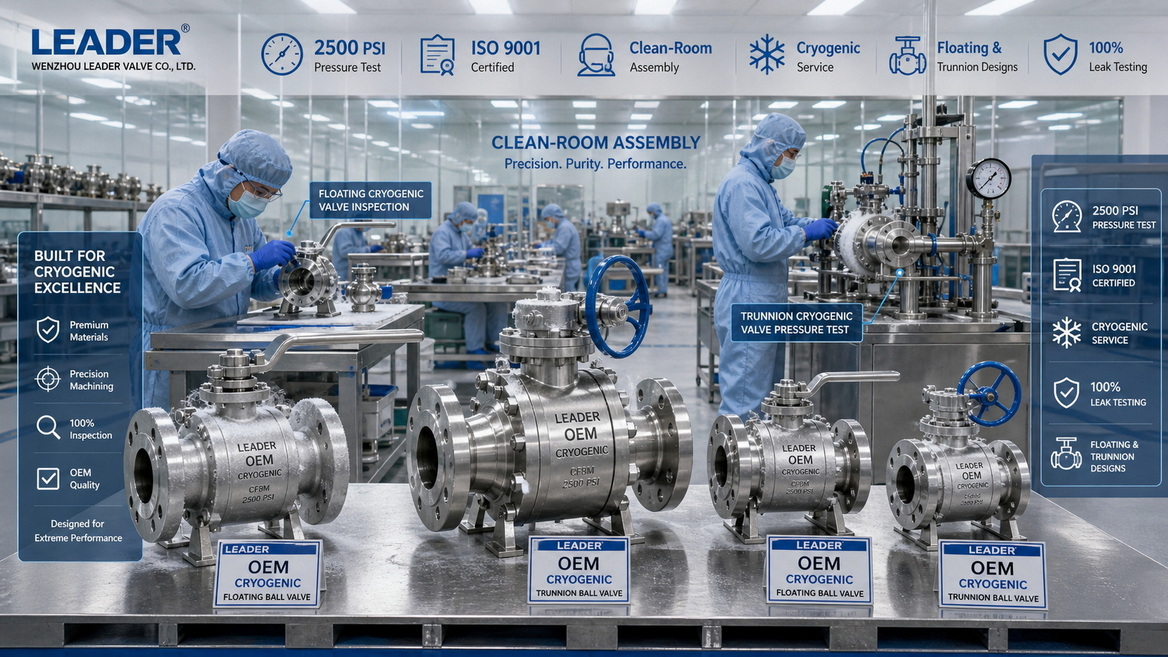
As a top Chinese manufacturer, we specialize in floating and trunnion cryogenic ball valves for oil/gas, desalination, drilling. 20+ years experience; ISO 9001 certified.
Custom designs for foreign brands/wholesalers.
Ready for your project? Contact us for quotes or samples today!
FAQ
1. What temperatures do cryogenic ball valves handle?
Down to -196°C for LNG/nitrogen; per BS 6364.
2. Floating or trunnion for high-pressure LNG?
Trunnion for stability above 600 psi.
3. Are Leader valves API compliant?
Yes, API 598/BS 6364 tested.
4. How to maintain cryogenic seats?
Inspect quarterly; replace if leaks occur.
5. OEM lead time for custom trunnion valves?
4-8 weeks; contact for quotes.
References
- : Original article content from https://www.ladishvalves.com/news/low-temperature-cryogenic-valves/.